Sealing and environment · Updated 2026-10-28
Glass-to-Metal vs Epoxy-Sealed Feedthroughs
A feedthrough has to do two jobs at once: carry current through a wall, and keep gas or liquid from following the conductor. The seal between conductor and body decides how tight the part is, how hot it can run and how much current it can carry. Our range uses two main constructions: glass fused to metal, and epoxy molded around a conductor. Several connector series also offer resin-potted or rubber-sealed versions next to a glass-sealed version, which makes direct comparisons possible.
How a glass-to-metal seal works
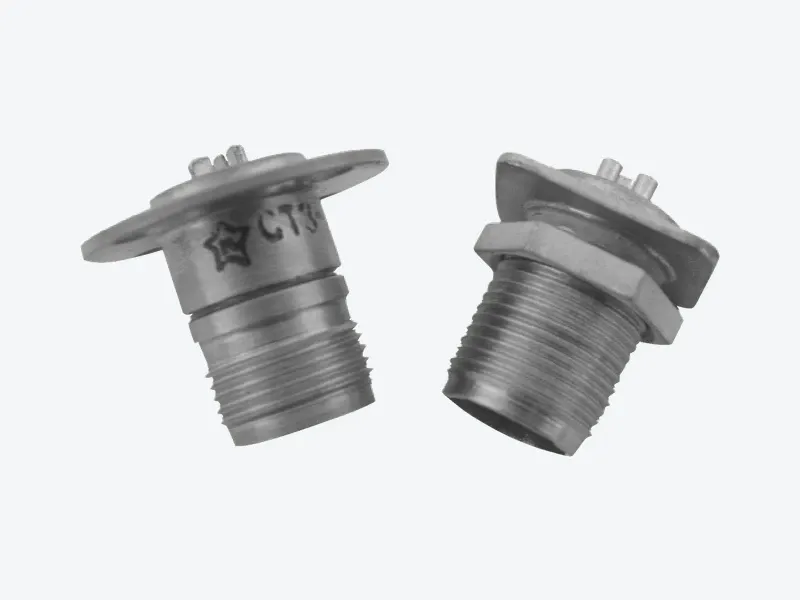
Each contact is fused into the shell with glass, so gas and moisture cannot pass through the connector. Glass is inorganic: it does not absorb water or soften in the way polymers do, which is why glass-sealed parts are used for high temperatures and for enclosures that must stay gas-tight over many years.
The glass, the contact and the shell must expand at compatible rates, or thermal cycling can crack the seal. For this reason the construction changes with the seal. In our XC family, standard receptacles use high-strength aluminum shells and thermoset insulators, while glass-sealed receptacles use steel shells and glass insulators. Glass is rigid, so pins should not be bent or used to carry mechanical load.
How an epoxy-sealed feedthrough works
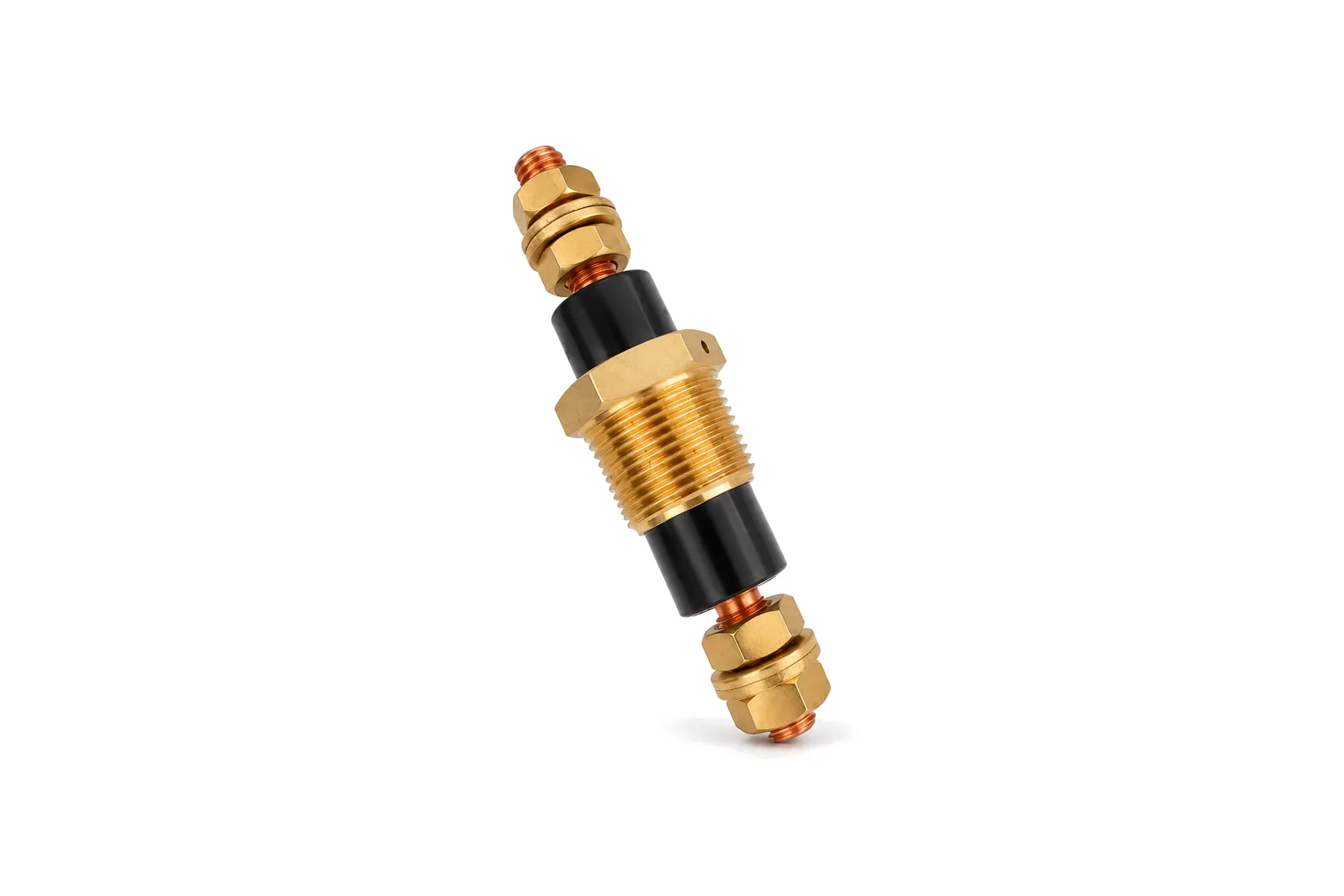
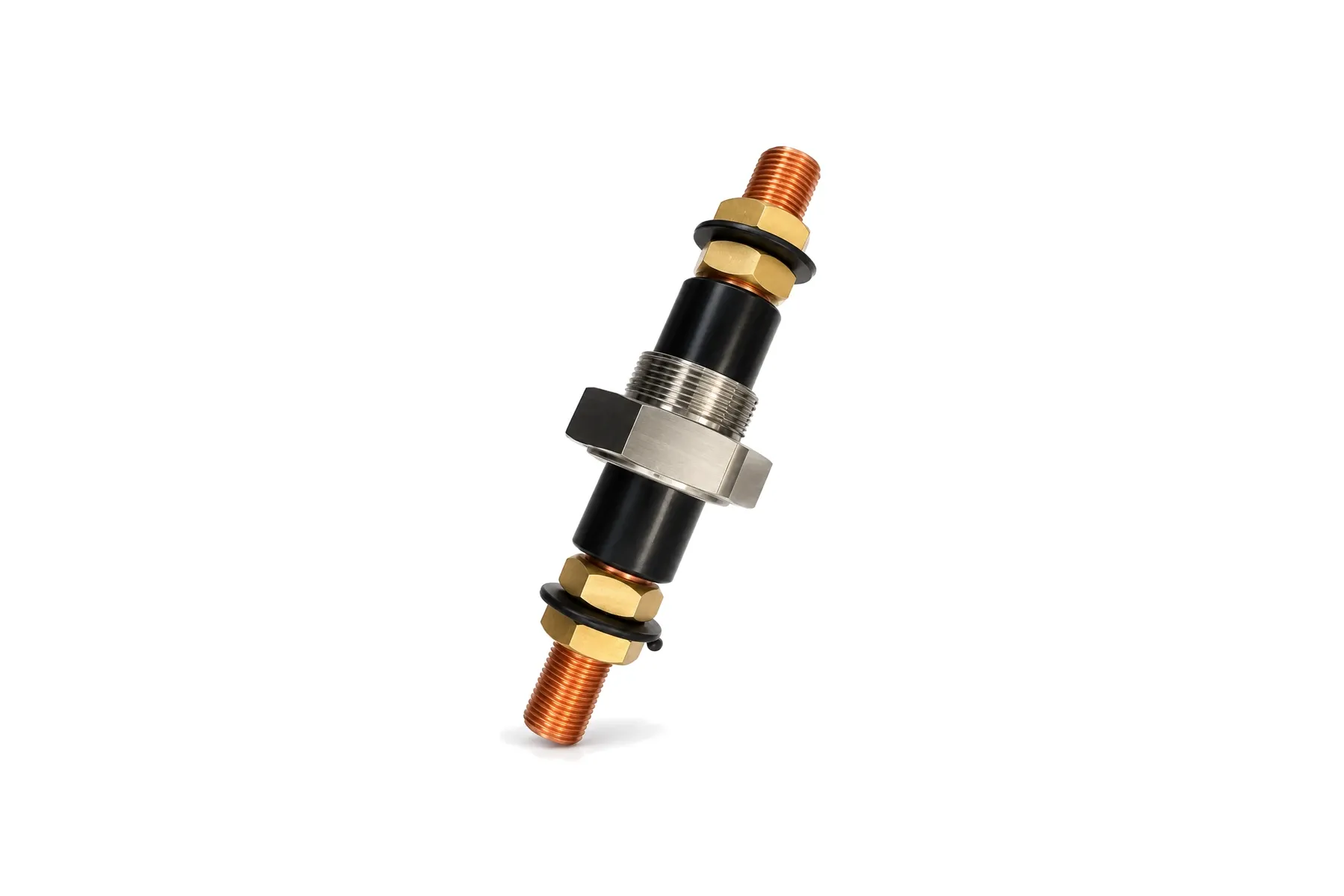
In our high-current feedthrough studs, a copper stud is molded into epoxy molding compound inside a metal body. NPT-sealed studs use a brass body that seals into the wall with a tapered NPT thread; O-ring sealed studs use a stainless-steel body with a fluorosilicone, FKM or HNBR O-ring. There are two seal paths to consider: through the epoxy along the stud, and between the body and the wall.
Epoxy can be molded around large conductors, so this construction suits single high-current studs. Like all polymers, epoxy has a temperature limit well below that of glass, and the O-ring adds its own limits.
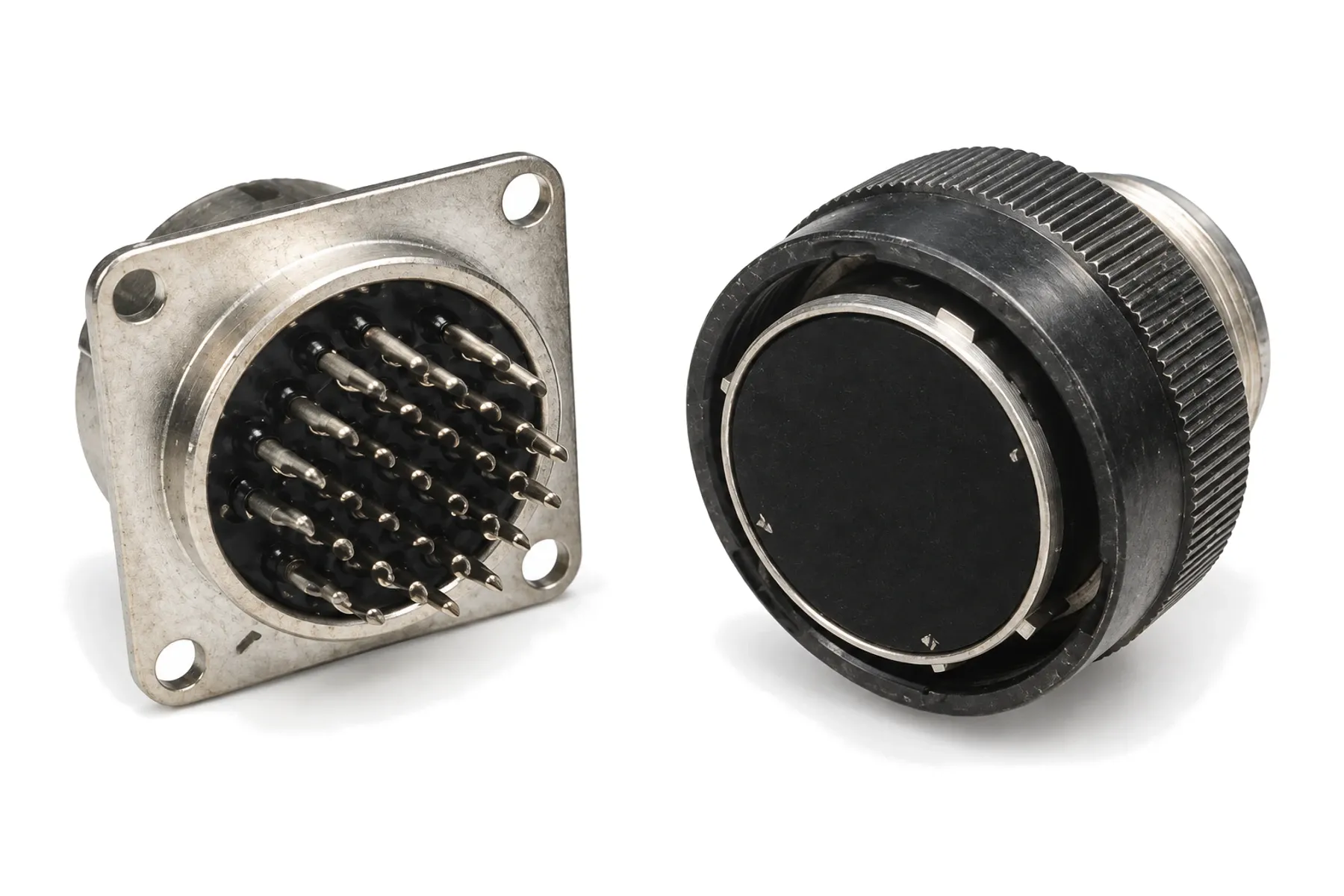
Resin potting is a related approach for multi-pin connectors: the J30J M variant is potted (resin) sealed, and XC and XCA through-bulkhead receptacles are potted.
Leak rates in our data
| Product | Seal | Stated leak rate | Condition |
|---|---|---|---|
| CT-M receptacles | Glass-to-metal | No leakage | 152 kPa differential |
| XC / XCA receptacles | Glass | ≤ 0.1 Pa·cm³/s | 152 kPa differential |
| YB I | Glass | < 0.1 Pa·cm³/s | 100 kPa |
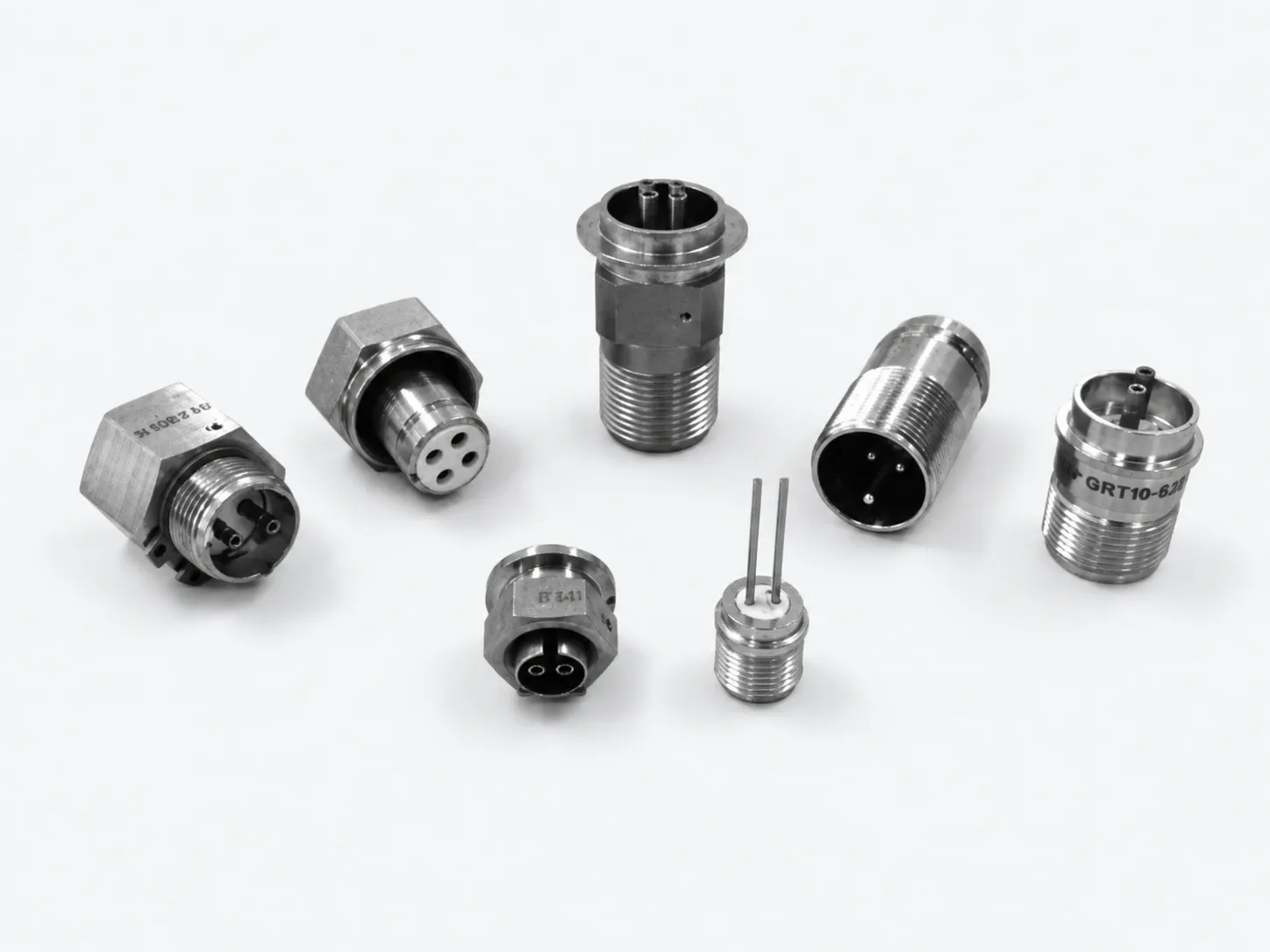
| GRT hermetic receptacles | Glass insulators | ≤ 4.55 × 10⁻³ cm³/s | 0.1 MPa |
| NPT and O-ring studs | Epoxy | < 1 × 10⁻⁸ Pa·m³/s | 0.1 MPa differential |
| XC / XCA through-bulkhead | Potted | ≤ 46 Pa·cm³/s | 50.7 kPa differential |
| YB I | Grommet | < 460 Pa·cm³/s | 200 kPa |
Within one series, the glass-sealed version has the lower stated leak rate: in XC and XCA, ≤ 0.1 Pa·cm³/s at 152 kPa for glass against ≤ 46 Pa·cm³/s at 50.7 kPa for potted. The epoxy studs also reach < 1 × 10⁻⁸ Pa·m³/s at 0.1 MPa, so a well-designed epoxy seal can meet a tight vacuum specification.
Values across series use different units and pressures. To compare, convert to one unit (1 Pa·cm³/s = 10⁻⁶ Pa·m³/s; 1 Pa·L/s = 10⁻³ Pa·m³/s) and compare at the same differential. Units and test methods are explained in hermetic connector leak rates explained.
Temperature
| Product | Seal | Operating temperature |
|---|---|---|
| GRT | Glass insulators | −55 to +500 °C, by model |
| CT-M | Glass-to-metal | −55 to +200 °C |
| ZH28 | Glass | −60 to +155 °C, 200 °C maximum |
| XC / XCA | Glass or potted | −55 to +150 °C |
| NPT-sealed studs | Epoxy, NPT thread | −40 to +130 °C |
| O-ring sealed studs | Epoxy, fluorosilicone / FKM O-ring | −40 to +130 °C / −20 to +130 °C |
| Custom JXZ-37B / JXZ-43B | Flange mount, PPS insulating covers | −40 to +170 °C |
The epoxy studs in our data are rated to +130 °C; for higher temperatures, our glass-sealed series run to +200 °C (CT-M) and, by model, +500 °C (GRT). For background on materials at high temperature, see high-temperature connector selection.
Current and voltage
Epoxy-sealed studs carry the high currents: NPT-sealed studs from 105 to 750 A, O-ring sealed studs from 105 to 1000 A, both with 5000 VAC withstanding voltage and ≥ 5000 MΩ insulation resistance. Custom designs include a 750 A O-ring sealed stud (2400 VAC) and flange-mounted 600 A and 450 A feedthroughs (5000 VAC).
Our glass-sealed products are multi-pin connectors for signal and power circuits:
- CT-M: 2 to 5 contacts, 7.5 A (Ø 1.0 mm) and 13 A (Ø 1.6 mm), 250 V rated.
- ZH28: 3 to 61 contacts, 3, 6 and 9 A by contact diameter (6, 12 and 18 A maximum), working voltage 400 to 700 V by class.
- GRT: 2 to 5 contacts, 7.5 to 13 A.
- SHX10: contacts from size 22D (5 A) to size 8 (46 A).
In XC and XCA, glass-sealed contacts have a higher rated contact resistance: a Ø 1 mm contact is rated ≤ 4.5 mΩ standard, ≤ 9 mΩ potted and ≤ 13.5 mΩ glass-sealed; the Ø 1.5 mm contact ≤ 2.5, ≤ 5 and ≤ 7.5 mΩ. Include this in your voltage-drop budget. Working and test voltages are compared in withstanding voltage vs working voltage.
Pressure
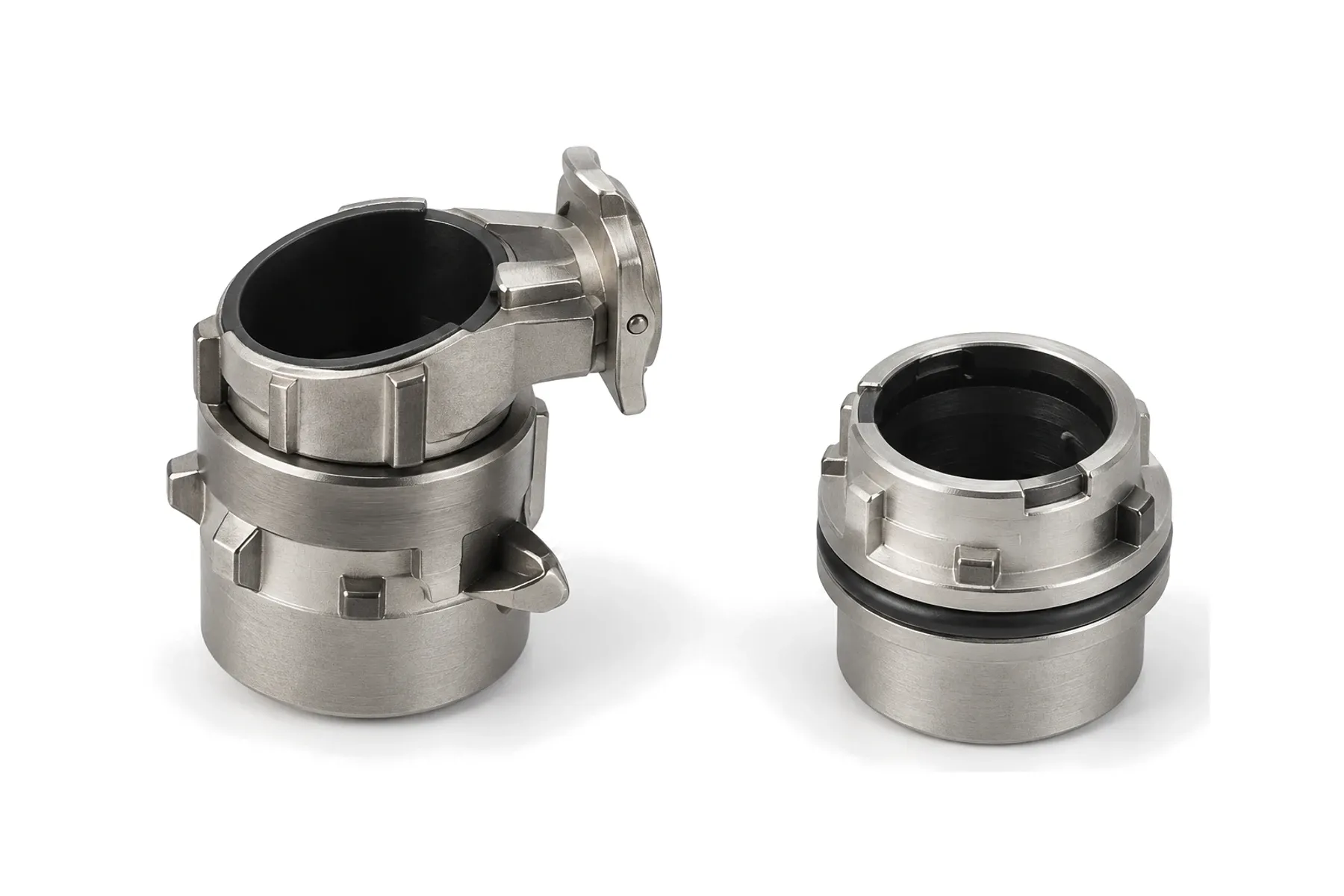
Every NPT and O-ring stud is pressure-tested at 0.8 ± 0.05 MPa, and the type test covers ≥ 8 MPa hydrostatic pressure. The SHX10 glass-sealed receptacle withstands 5 MPa on its own and 10 MPa mated; because the receptacle is glass-sealed, it stays gas-tight and watertight even when unmated. For depth ratings, see subsea connector depth and pressure ratings.
Selection table
| Requirement | Seal | Our series |
|---|---|---|
| 100 A or more through a vessel or chamber wall | Epoxy stud | NPT-sealed studs, O-ring sealed studs, custom power feedthroughs |
| Removable mounting in a threaded port | Epoxy stud, O-ring | O-ring sealed studs |
| Multi-pin, gas-tight enclosure wall | Glass | CT-M, ZH28, XC, YB I, Y27 |
| Above +200 °C | Glass | GRT |
| Marine bulkhead, plugs on both sides | Potted | XCA through-bulkhead |
| Marine bulkhead, lower leak rate | Glass | XCA glass-sealed receptacle |
| Oil, gas and subsea pressure | Glass | SHX10 |
| Micro-D | Glass or resin potting | J30J M1 (glass) or M (potted) |
For 38999-type hermetic receptacles, see J599 Series III: J599/21, /23, /25 and /27 with solder-sealed pins, leak rate ≤ 1 × 10⁻⁸ Pa·m³/s at 0.1 MPa.
What to send us
Current and voltage per circuit, number of contacts, operating temperature, pressure or vacuum level and direction, the leak rate you need with test gas and differential, wall thickness and port thread or flange, and the connection on each side. We test to your requirements, with third-party testing on request, and build samples to order in 4–8 weeks. Request a quote.