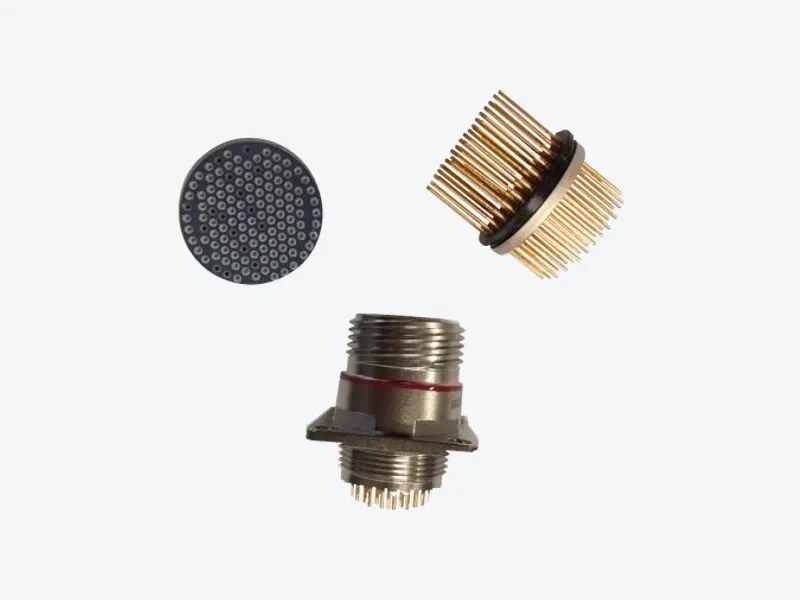
38999 Series III-Type EMI Filter Connectors, Marine Grade
C or π filter per contact · up to 55 dB · marine grade
38999-type connectors with a low-pass filter or transient suppression in every contact — EMI/RFI and surge protection at the enclosure wall.
Electronics must keep external interference out and their own high-frequency noise in. A filter connector puts a low-pass filter on every contact, so noise is shunted to the shell at the enclosure wall.
Our filter connectors use planar C or π filter arrays from 75 pF to 100 nF with up to 55 dB insertion loss at 100 MHz, in 38999 Series III (threaded) and Series I (bayonet) types. They keep the standard mating interface, so they drop into existing wiring, and are marine grade.
| Series | Filter circuits | Capacitance | Insertion loss | Coupling | Temperature |
|---|---|---|---|---|---|
| J599 III filter | C or π | 75 pF to 100 nF | Up to 55 dB at 100 MHz | Triple-start thread | −55 to +125 °C |
| GJB599 I filter | C or π | 75 pF to 100 nF | Up to 55 dB at 100 MHz | Bayonet | −55 to +125 °C |
| TVS | — | — | — | — | −55 to +125 °C |
C or π filter per contact · up to 55 dB · marine grade
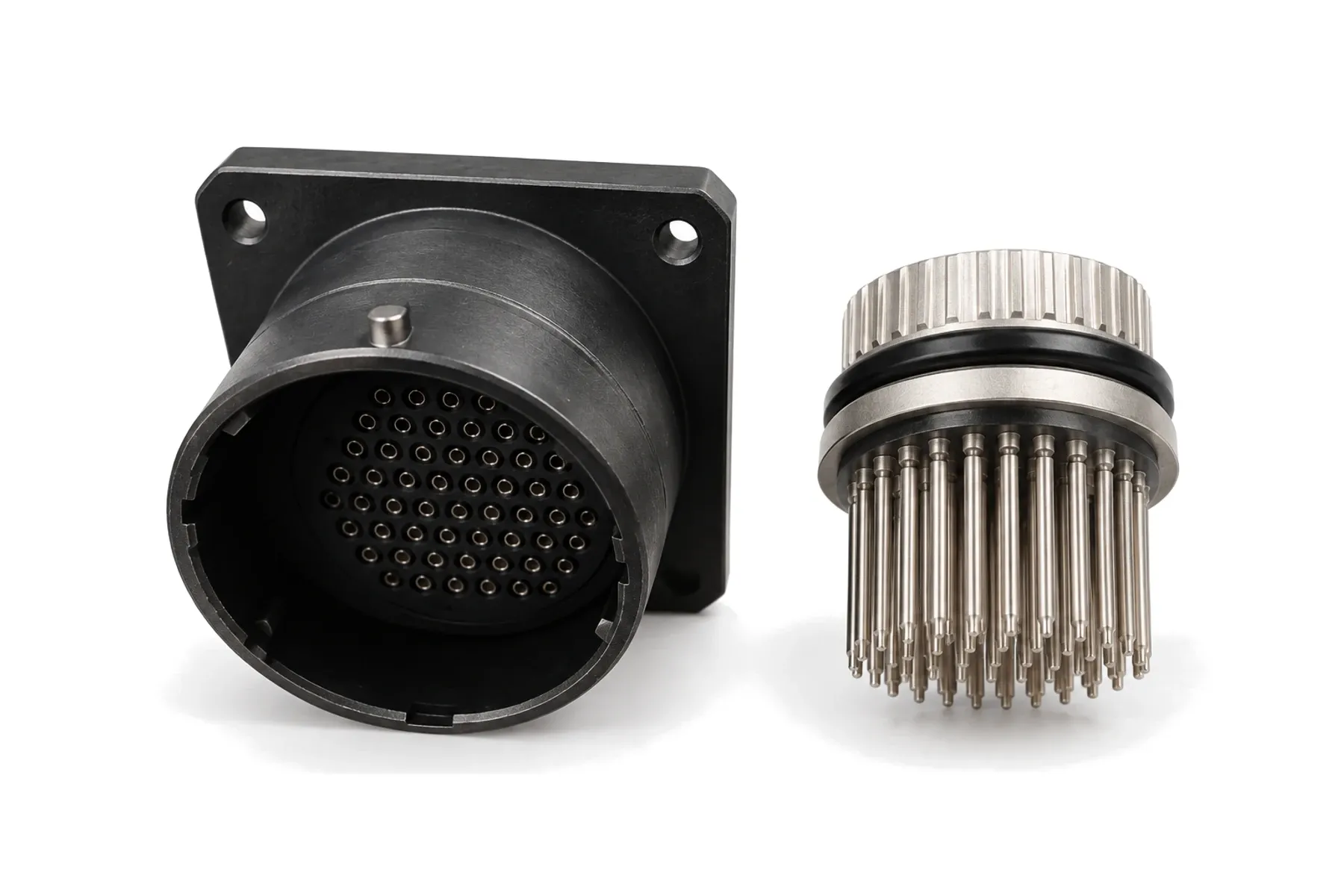
Bayonet · C or π filter per contact · marine grade
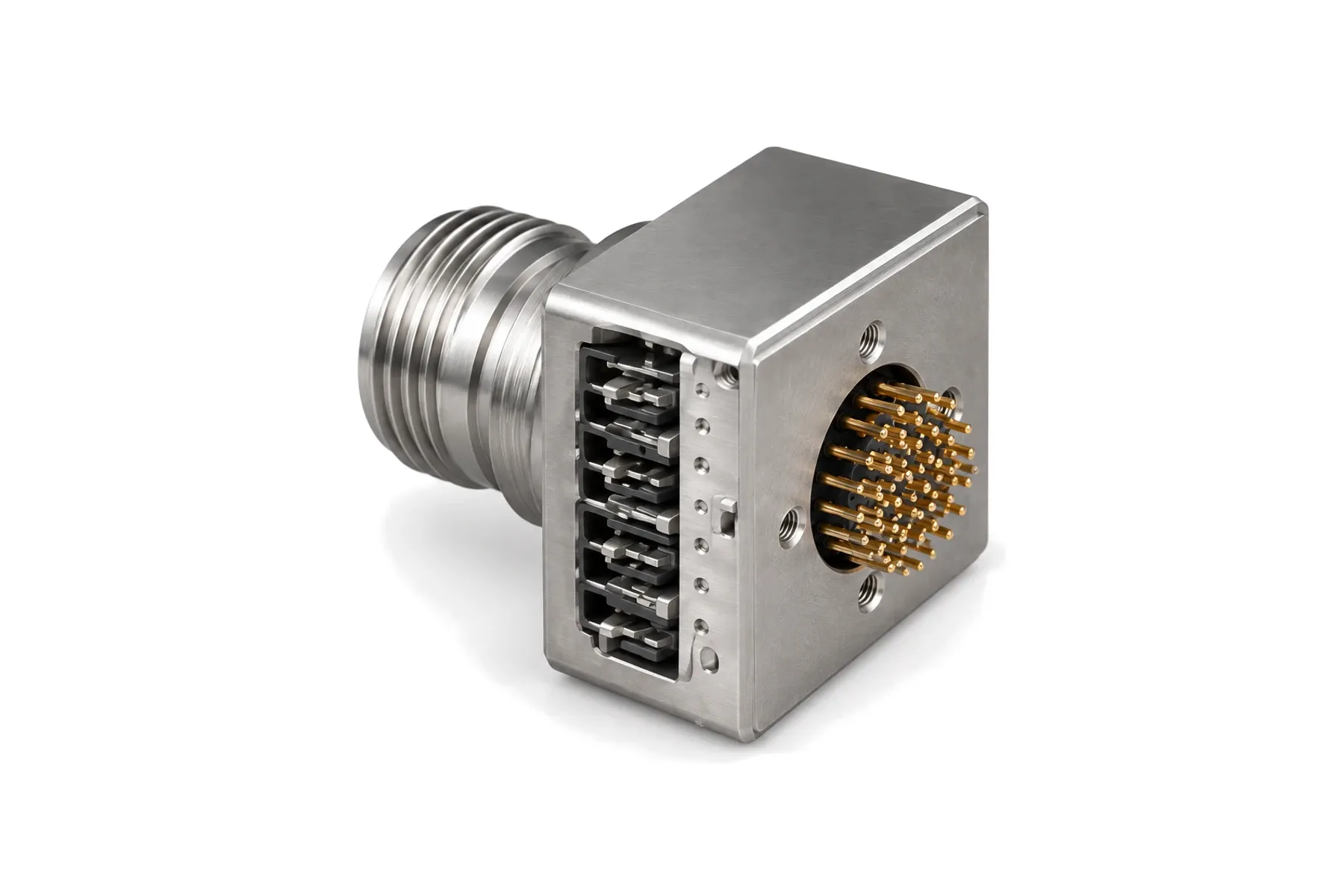
Surge, lightning and ESD protection in the connector
Pick capacitance by cut-off frequency: 100 nF for 0.1 MHz up to 75 pF for 70 MHz.
π filters give steeper attenuation (up to 55 dB at 100 MHz).
50, 100, 200 or 400 VDC classes; DC circuits only.
Tell us about spikes, relays and motors so we can size the filter correctly.
Surge, lightning and ESD suppression in the connector.
Standard non-filter versions.
Base connector part number, pin-out with signal type, frequency, maximum voltage and current per contact, and the insertion loss or capacitance you need. We will return a filter proposal.
Part number, drawing, pin-out or a short description of your application.
Our engineers match the configuration and reply with a drawing and quotation.
Samples are made to your order. Third-party testing to your specification is available on request.
You test the samples in your own equipment and approve them.
Production follows the approved sample configuration.
Send your part number, pin-out or drawing. An engineer will reply by email.