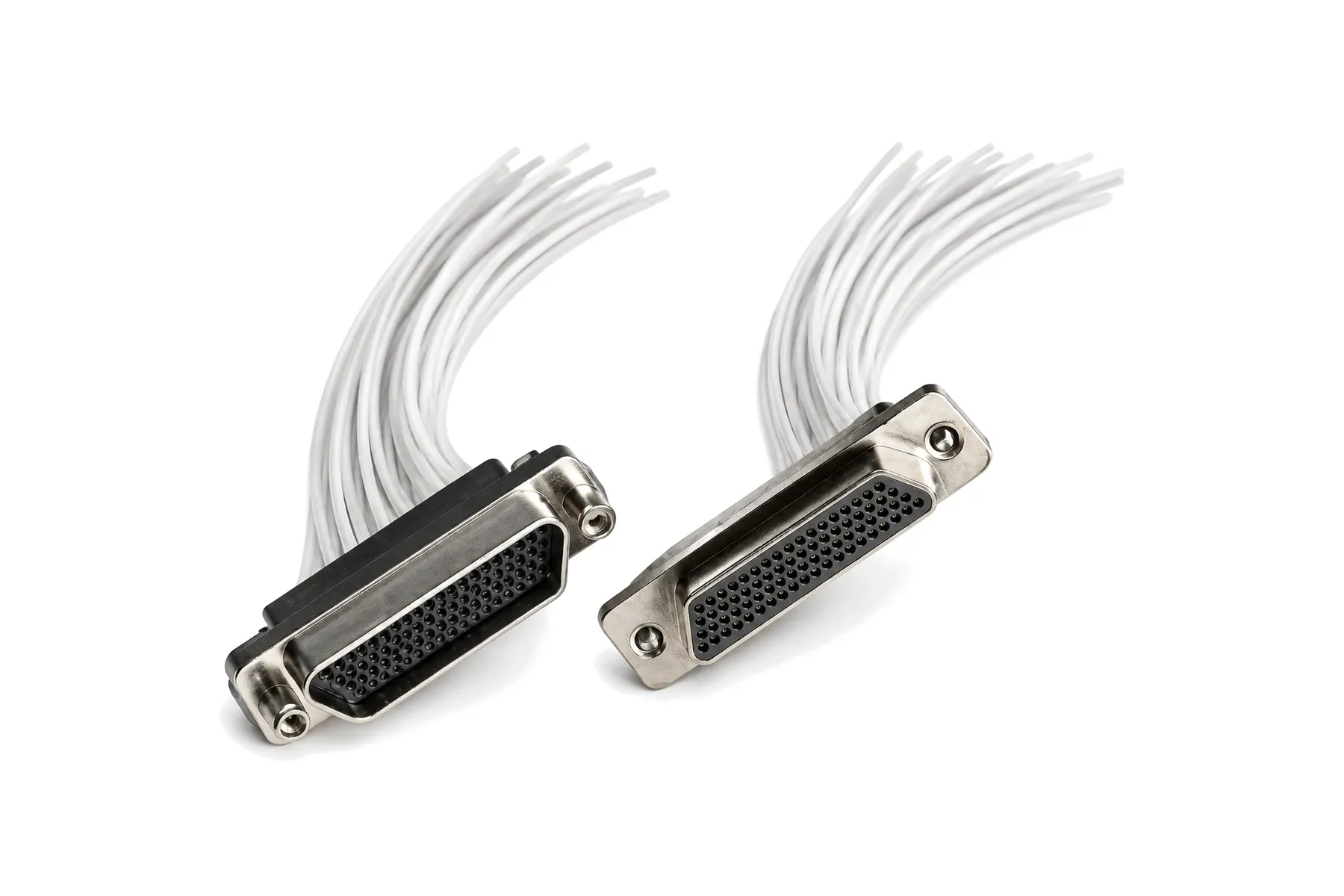
J30J Metal-Shell Micro-D Connectors
1.27 mm pitch · 5 to 144 contacts · twist-pin contacts
1.27 mm pitch rectangular connectors with gold-plated twist-pin contacts — metal-shell, stainless-steel, high-speed and pre-wired versions.
Micro-D connectors put a high contact count into a very small, lightweight metal shell. Each pin is a gold-plated twist pin — a bundle of fine spring wires that touches the socket at several points — which keeps contact resistance low under vibration and shock.
Our Micro-D range is built to GJB 2446, the Chinese counterpart of MIL-DTL-83513. It covers standard metal-shell versions from 5 to 144 contacts, a 100 Ω high-speed version for differential signals, and pre-wired assemblies terminated to your cable and length.
For tighter spaces, J30JZ uses gold-plated twist-pin contacts in a shell about 40 % of the J30J volume. Where power must pass through the same connector, the J30J mixed-power series carries 20 A power contacts alongside 3 A signal contacts.
J29 uses the same twist-pin principle on a larger 1.91 × 1.65 mm grid for 5 A per contact, and cost-optimized J30J-LC and plastic-shell J30-LC versions are available for cable assemblies.
| Series | Pitch | Contacts | Current rating | Temperature | Mating cycles |
|---|---|---|---|---|---|
| J30J | 1.27 mm | 5 to 144 | 3 A | −55 to +125 °C | 500 |
| J30JZ | 1.27 mm | 9 to 100 | 3 A | −55 to +125 °C | Up to 20,000 |
| J30J mixed power | Micro-D shell | 2 to 10 power; 2 + 7 to 2 + 37 mixed | 20 A power; 3 A signal | −55 to +125 °C | 500 |
| HJ30J | 1.27 mm | 12 to 100 | — | −55 to +125 °C | — |
| J29 | — | 9 to 66 | — | −55 to +125 °C (220 °C J29G) | 500 |
1.27 mm pitch · 5 to 144 contacts · twist-pin contacts
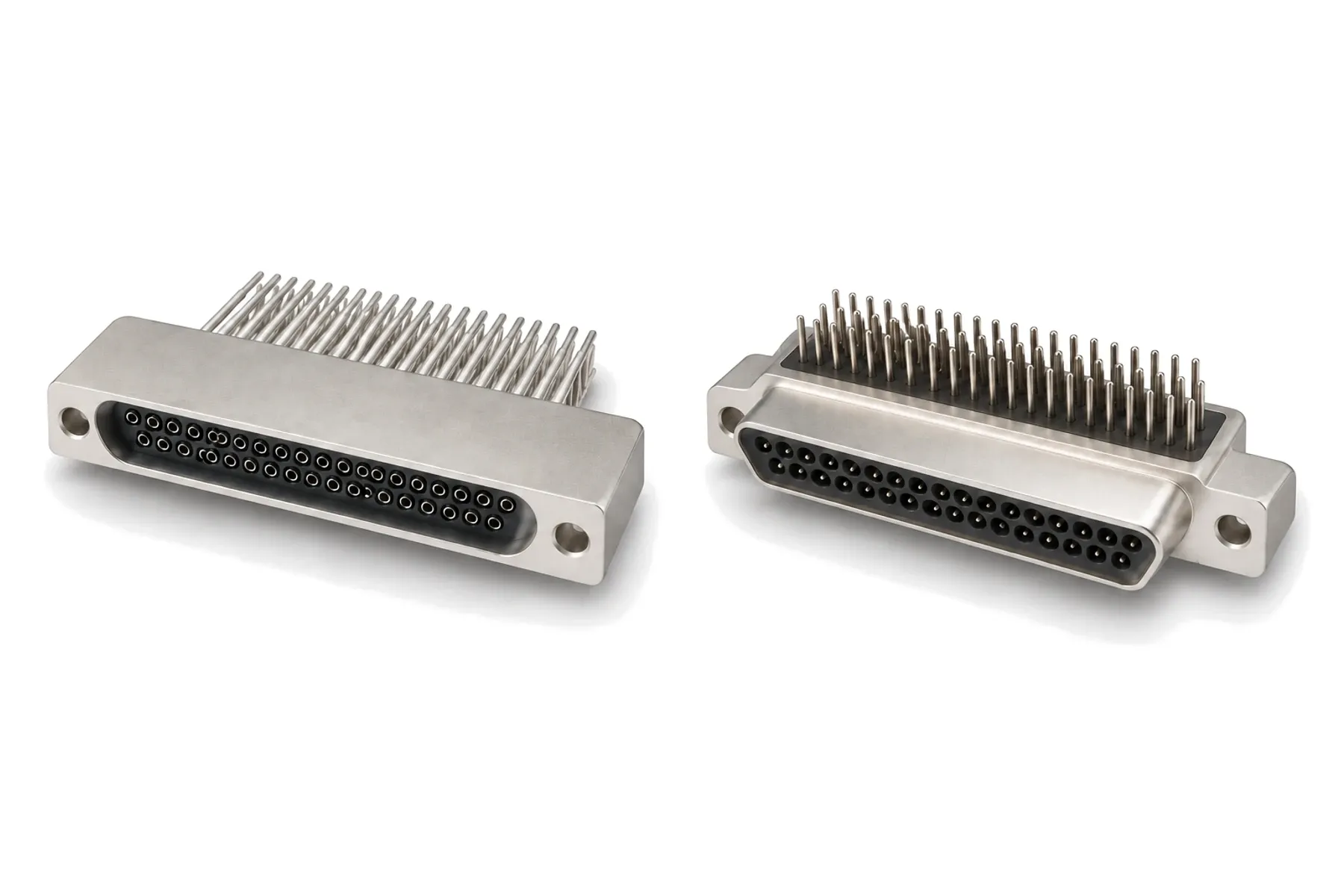
Twist-pin contacts · ≈ 40 % of J30J volume · 9 to 100 contacts
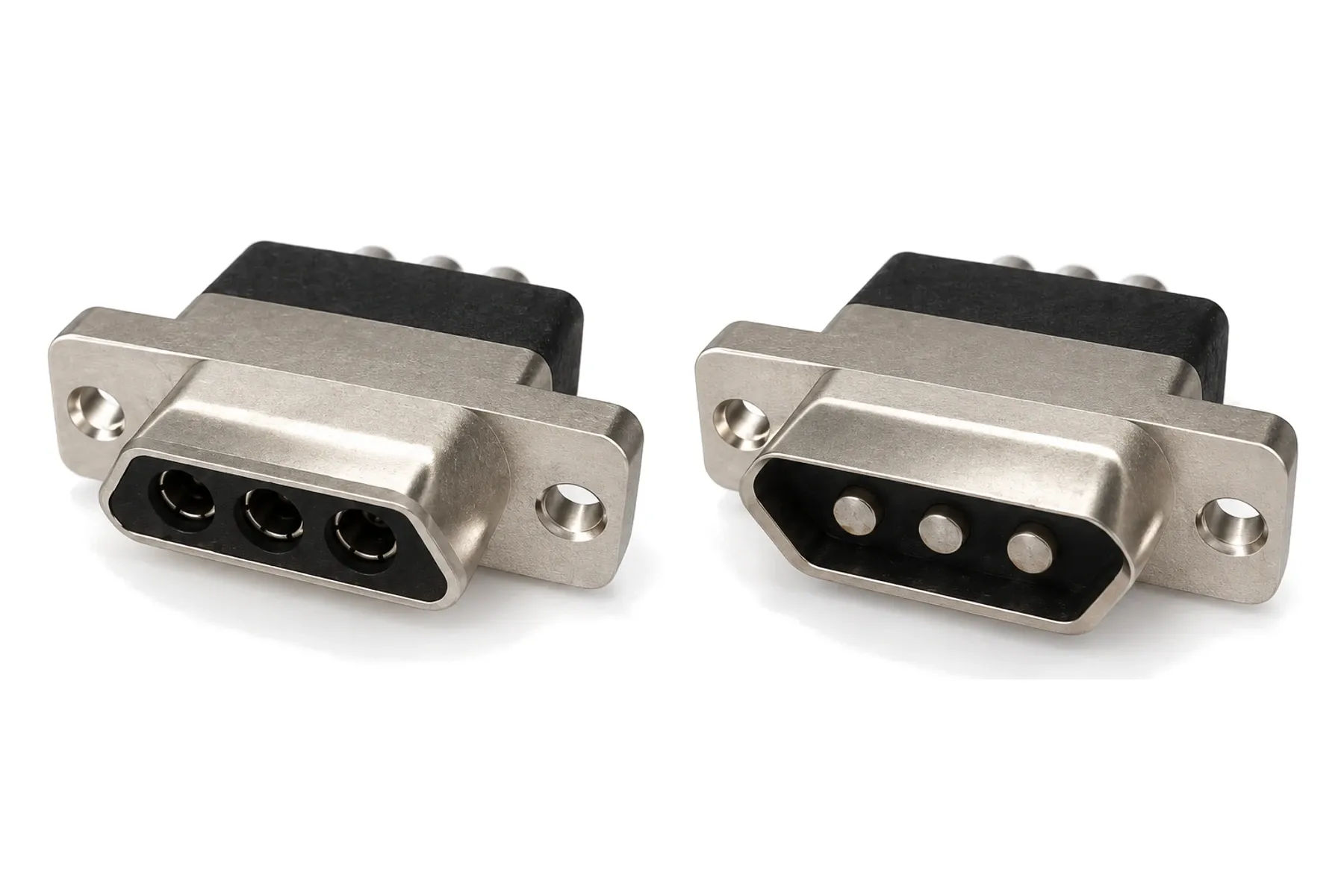
20 A power + 3 A signal · micro-D size · twist-pin signal contacts
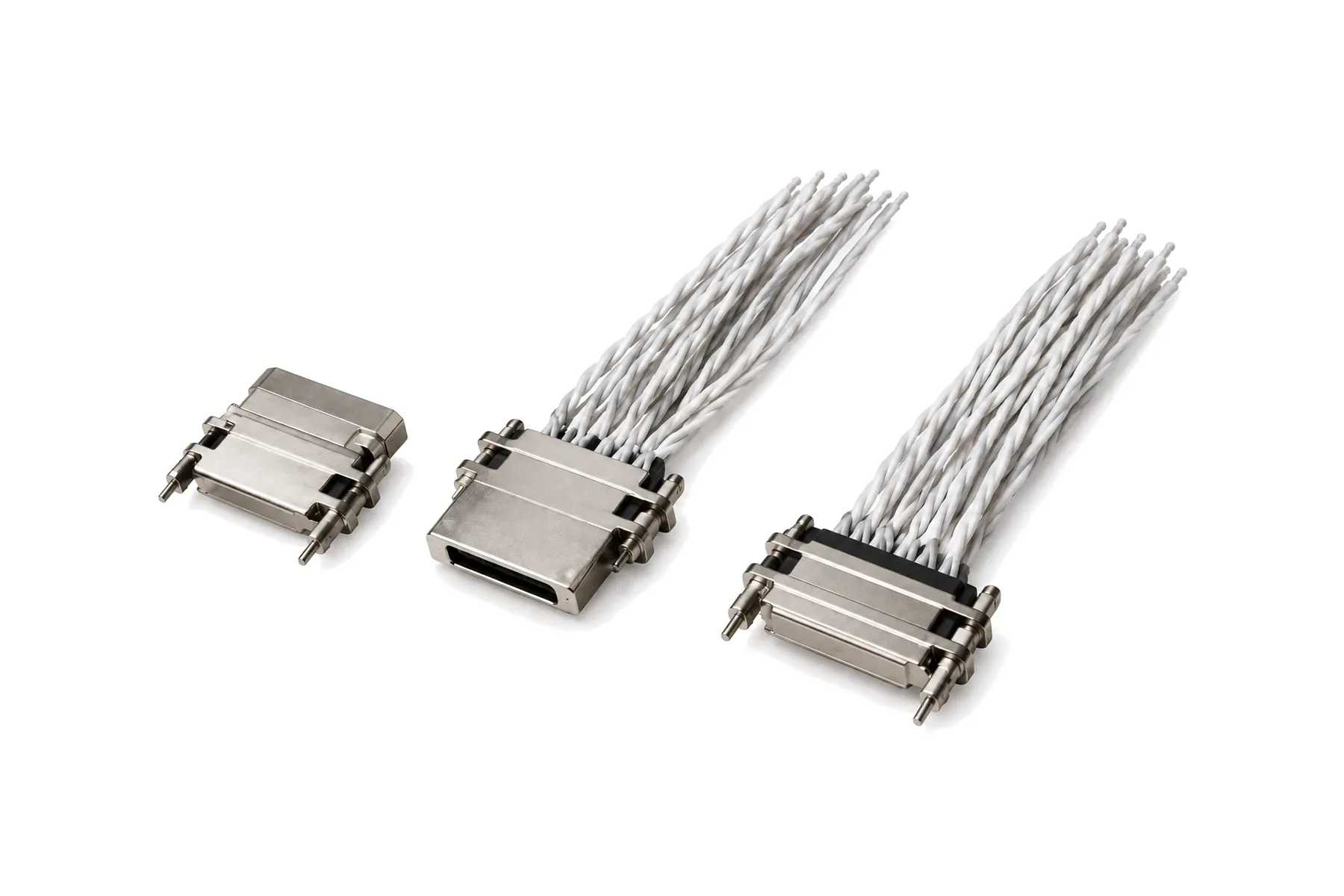
100 Ω differential pairs · up to 3.125 Gbps board-to-board
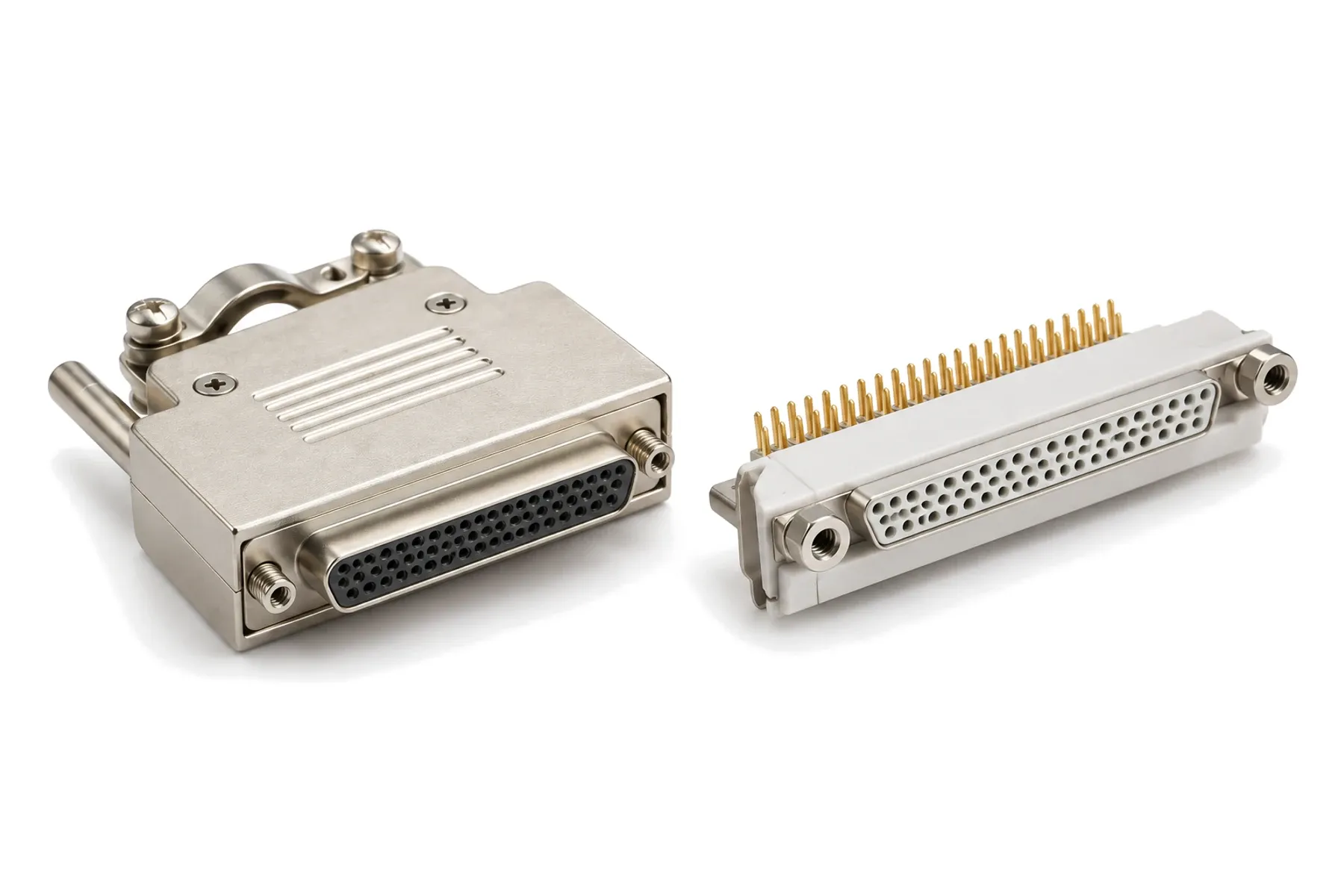
Twist-pin contacts · 1.91 × 1.65 mm grid · 9–66 contacts · 5 A
Send us the MIL-DTL-83513 or manufacturer part number you use today. We match it to a J30J configuration with the same pitch, contact count and termination, and can supply samples for your mating test.
Standard layouts run from 5 to 144 contacts in two or more rows. Tell us the count you need and whether signal and power share the connector.
Choose crimp or solder-cup wires, straight or right-angle PCB tails, or surface-mount versions for board-level designs.
Aluminum shells keep weight down. Stainless-steel shells are rated for 1000 h salt spray, compared with 48 h for aluminum.
For differential data, the HJ30J high-speed version is designed for 100 Ω impedance.
Jackscrews, jackposts and other locking options are available; match them to the mating half and panel thickness.
About 40 % of J30J volume, long mating life.
Power and signal in one micro-D shell.
Half the pitch of Micro-D for the tightest spaces.
100 Ω differential pairs for data links.
1000 h salt spray for marine and outdoor equipment.
Connectors terminated to your cable, length and labeling, tested before shipment.
Our J30J series is built to GJB 2446, the Chinese counterpart of MIL-DTL-83513, with the same 1.27 mm pitch and twist-pin contacts. Send us your current part number and we will propose the matching configuration and samples for your own mating test.
1.27 mm (0.050 in) contact spacing, the same as MIL-DTL-83513 Micro-D connectors.
Yes. We supply pre-wired Micro-D connectors and cable assemblies to your wire gauge, length and pin-out. Send us a drawing or a pin-out list with your inquiry.
Crimp contacts accept wire from 0.035 mm² to 0.15 mm²; 0.1–0.15 mm² is recommended.
Sample availability depends on the configuration. Include your application, the part or pin-out you need and expected quantities in the quote request, and we will confirm sample options and lead time.
Part number, drawing, pin-out or a short description of your application.
Our engineers match the configuration and reply with a drawing and quotation.
Samples are made to your order. Third-party testing to your specification is available on request.
You test the samples in your own equipment and approve them.
Production follows the approved sample configuration.
Send your part number, pin-out or drawing. An engineer will reply by email.