Sealing and environment · Updated 2026-09-28
Hermetic Connector Leak Rates Explained
A leak rate is the volume of gas that passes through the connector per second at a given pressure difference. It is the key figure for hermetic connectors and vacuum feedthroughs.
Units and conversions
| Unit | Equivalent of 1 × 10⁻⁸ Pa·m³/s |
|---|---|
| Pa·m³/s | 1 × 10⁻⁸ |
| mbar·L/s | 1 × 10⁻⁷ |
| atm·cc/s (approx.) | 1 × 10⁻⁷ |
(1 Pa·m³/s = 10 mbar·L/s ≈ 9.87 atm·cc/s.)
How leak rates are tested
- Helium mass-spectrometer leak test: the connector is mounted on a test fixture, helium is applied on one side and a detector measures helium on the other. This is the standard method for rates around 10⁻⁸ Pa·m³/s and below.
- Pressure-decay test: a chamber is pressurized and the pressure drop over time is measured. Simpler, but less sensitive.
- Test pressure: rates are stated at a pressure differential, commonly 0.1 MPa (1 bar). Always compare values at the same differential.
Typical values in our range
| Product | Stated sealing |
|---|---|
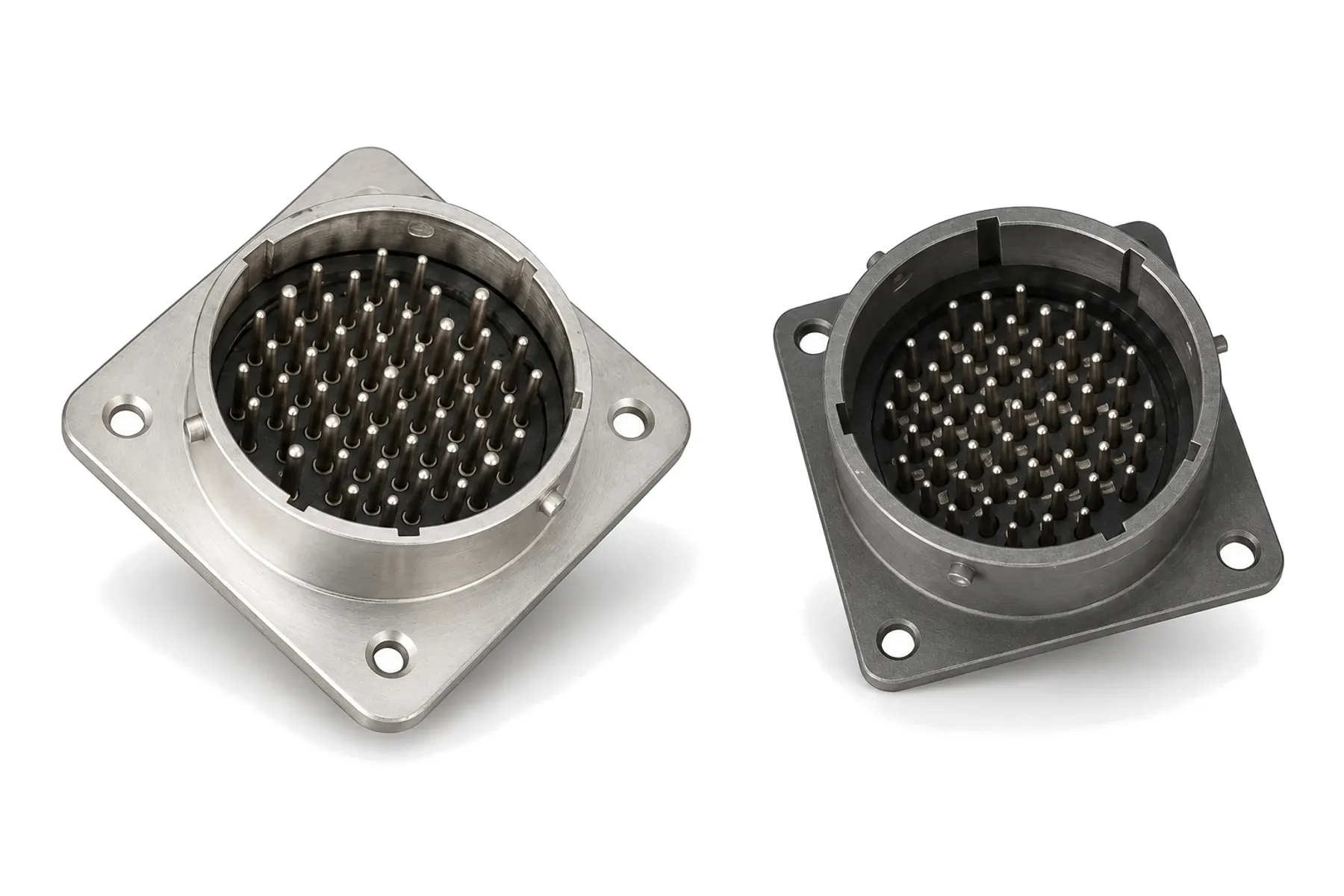
| J599 Series III hermetic receptacles | ≤ 1 × 10⁻⁸ Pa·m³/s at 0.1 MPa |
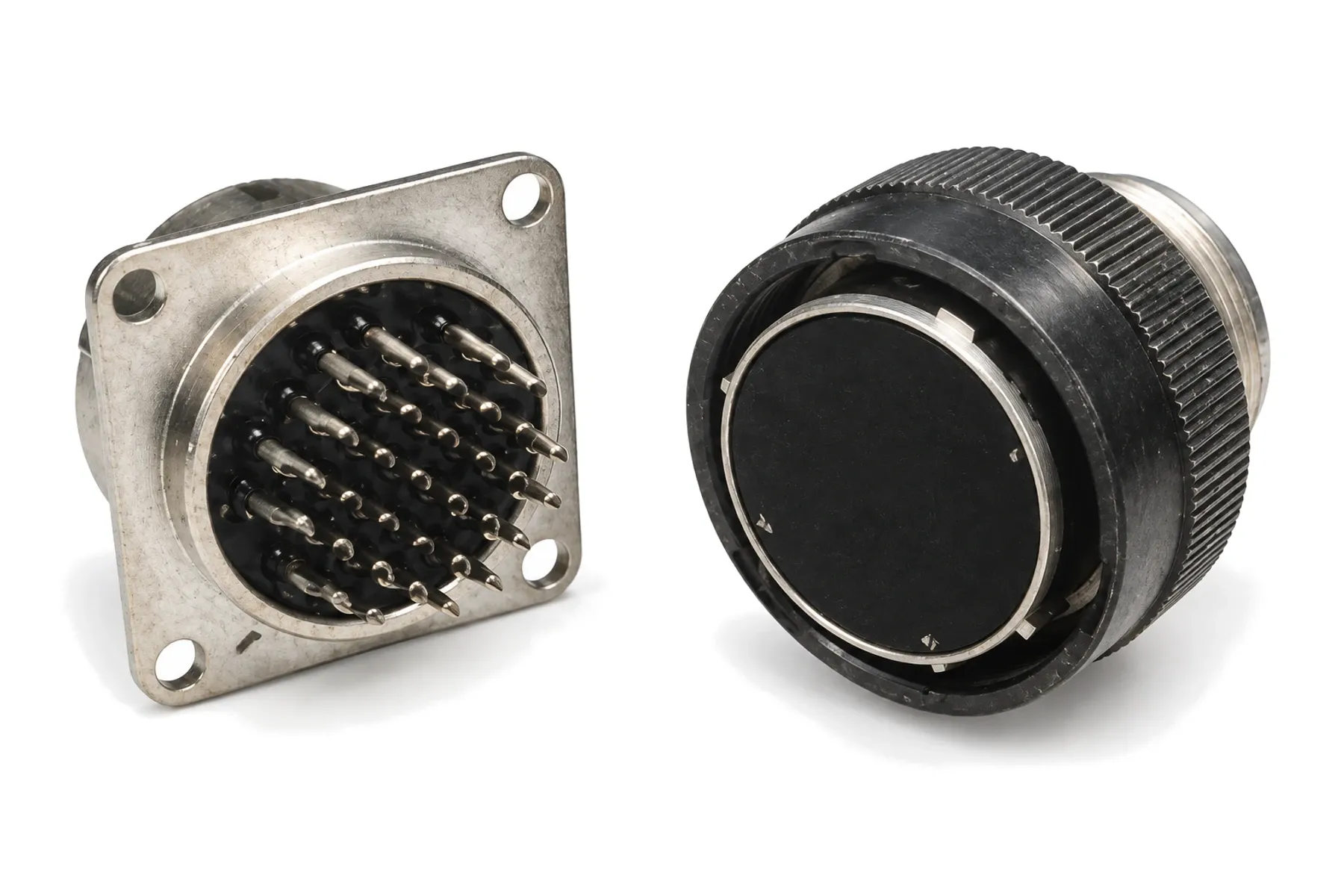
| GJB599 Series I and II hermetic receptacles | ≤ 1 × 10⁻⁸ Pa·m³/s at 0.1 MPa |
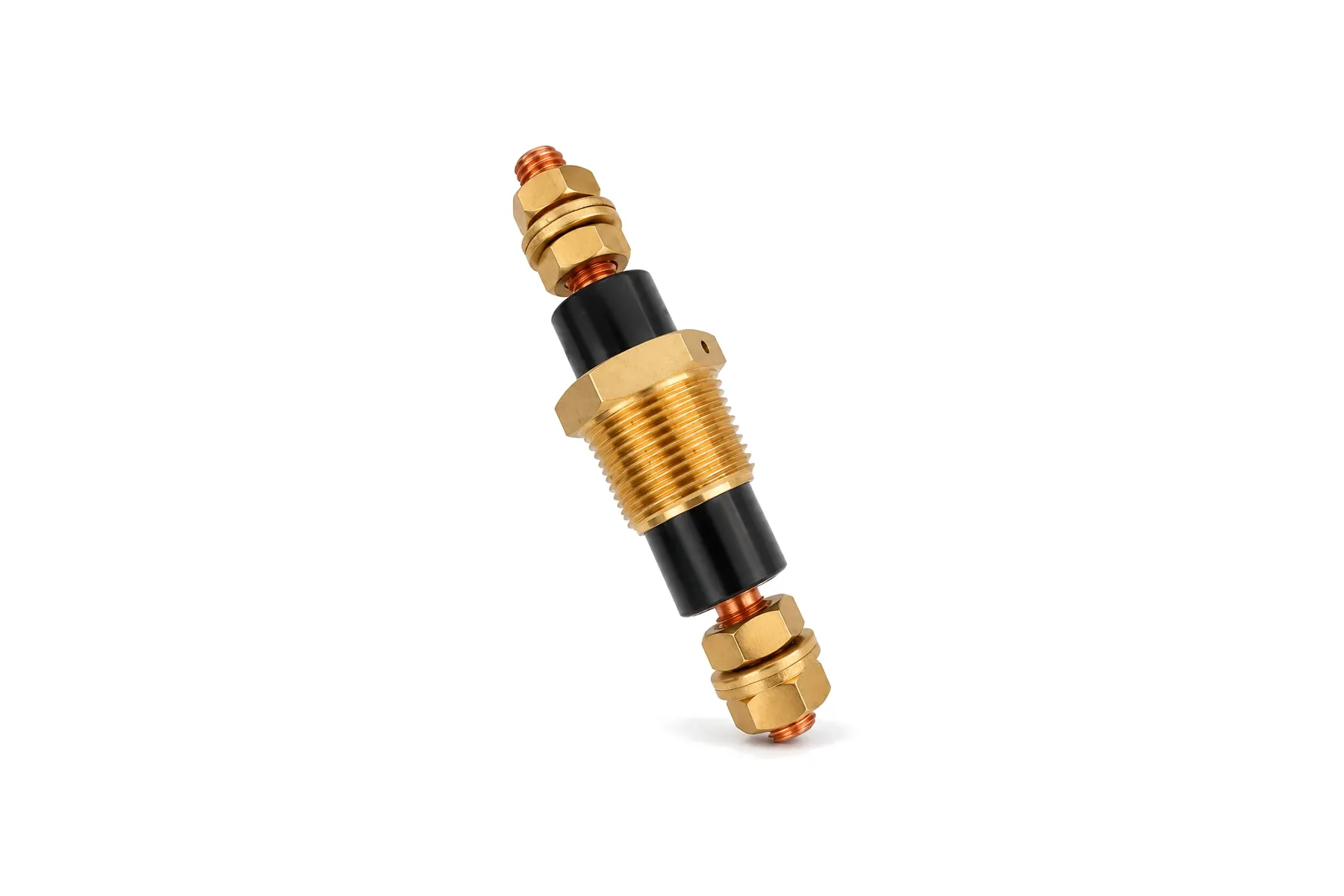
| High-current feedthrough studs | < 1 × 10⁻⁸ Pa·m³/s at 0.1 MPa |
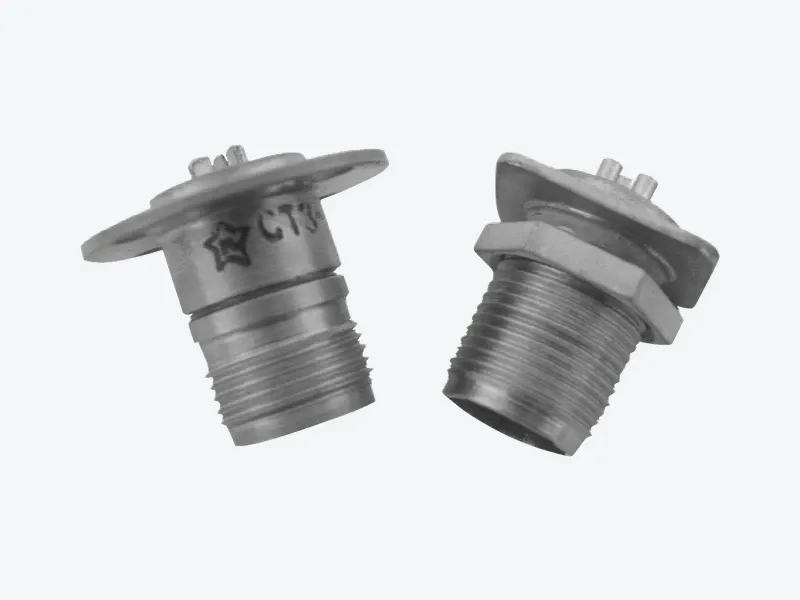
| CT-M glass-sealed receptacles | No leakage at 152 kPa differential |
| P-C bulkhead feed-throughs | ≤ 0.13 kPa/min at 101 kPa |
What to specify
- Maximum leak rate and unit.
- Test gas and method (helium is usual).
- Pressure differential and direction.
- Whether the test is on every unit or on samples.
- Temperature range the seal must survive (thermal cycling can open glass-to-metal seals if materials are mismatched).
We test to your requirements, including third-party testing on request.