Sealing and environment · Updated 2026-09-28
Selecting Connectors for High-Temperature Zones
What limits temperature
- Insulators and seals: elastomer grommets and thermoplastic inserts soften or age; above about 200 °C, glass or ceramic insulation is needed.
- Contact springs: copper-alloy springs relax at high temperature, losing contact force; plating can diffuse or oxidize.
- Shells and finishes: cadmium and some platings are limited to about 175 °C; stainless steel is preferred above 200 °C.
- Cable and termination: the wire insulation and solder joints often set the real limit.
Temperature bands and suitable designs
| Continuous temperature | Typical solution | Our series |
|---|---|---|
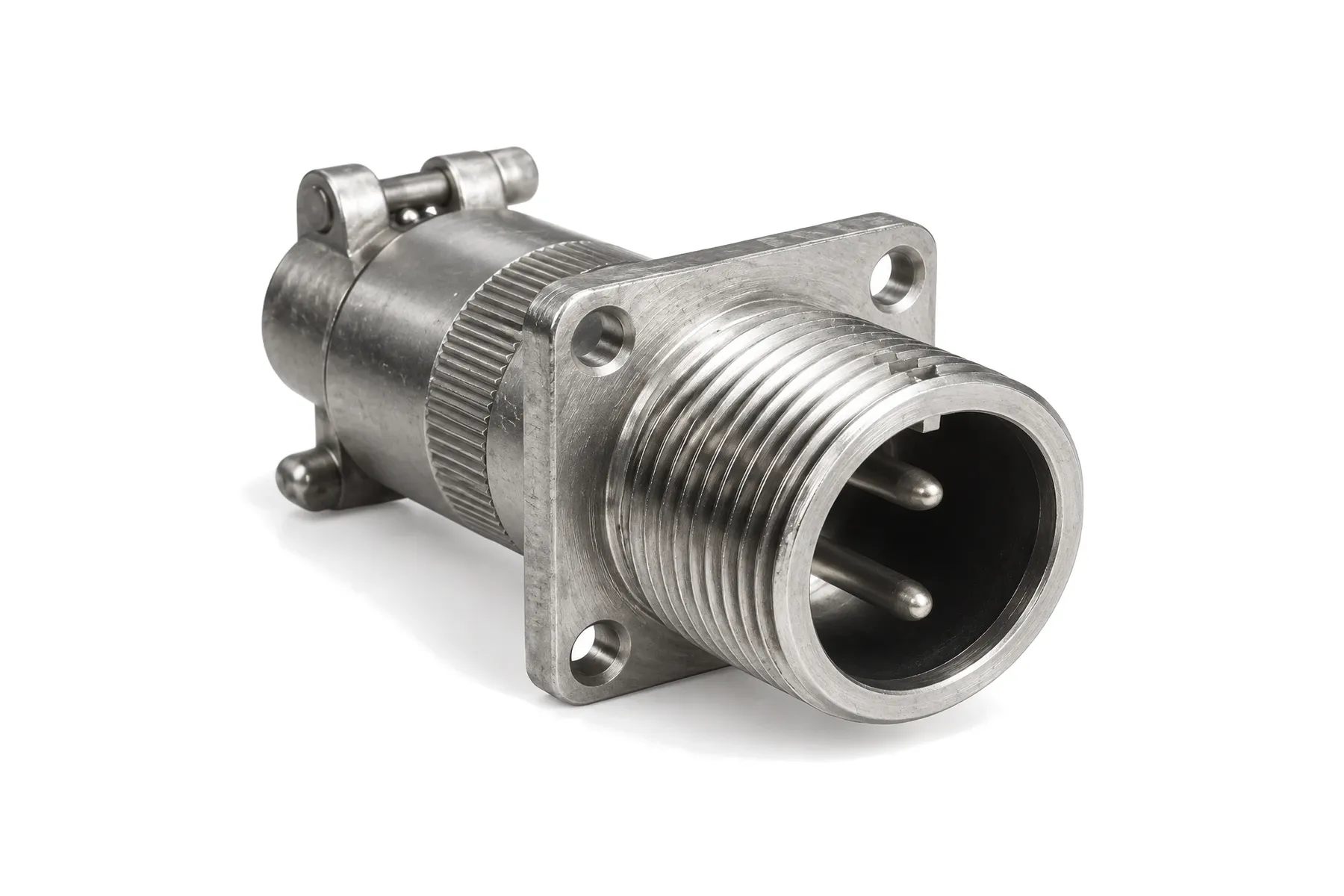
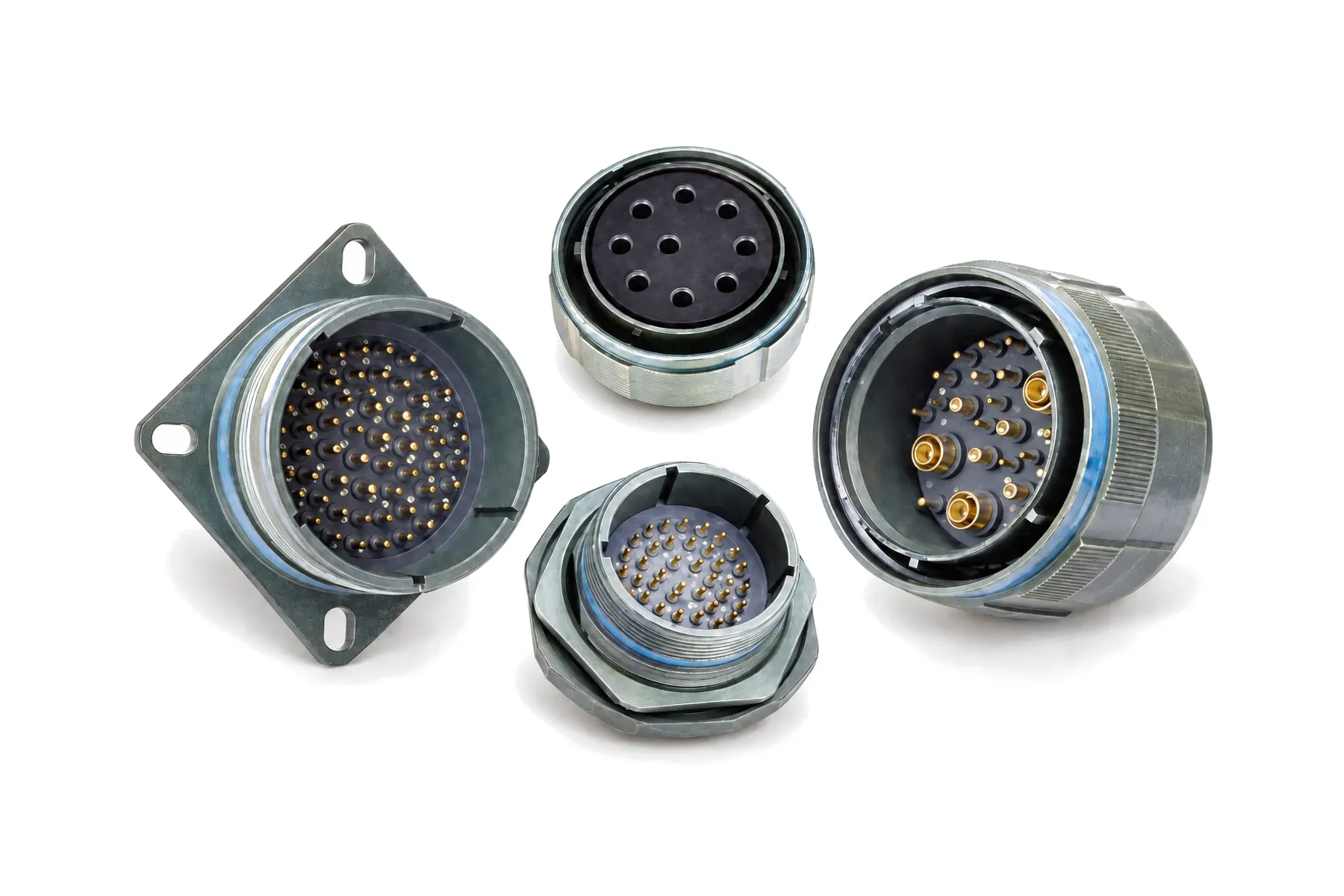
| to 175 °C | Standard 38999 with cadmium or nickel-PTFE finish | J599 Series III |
| to 200 °C | 38999 nickel, stainless or titanium; glass-sealed receptacles | J599 Series III, CT-M |
| to 260 °C | High-temperature 38999 in stainless steel | J599 Series III MT |
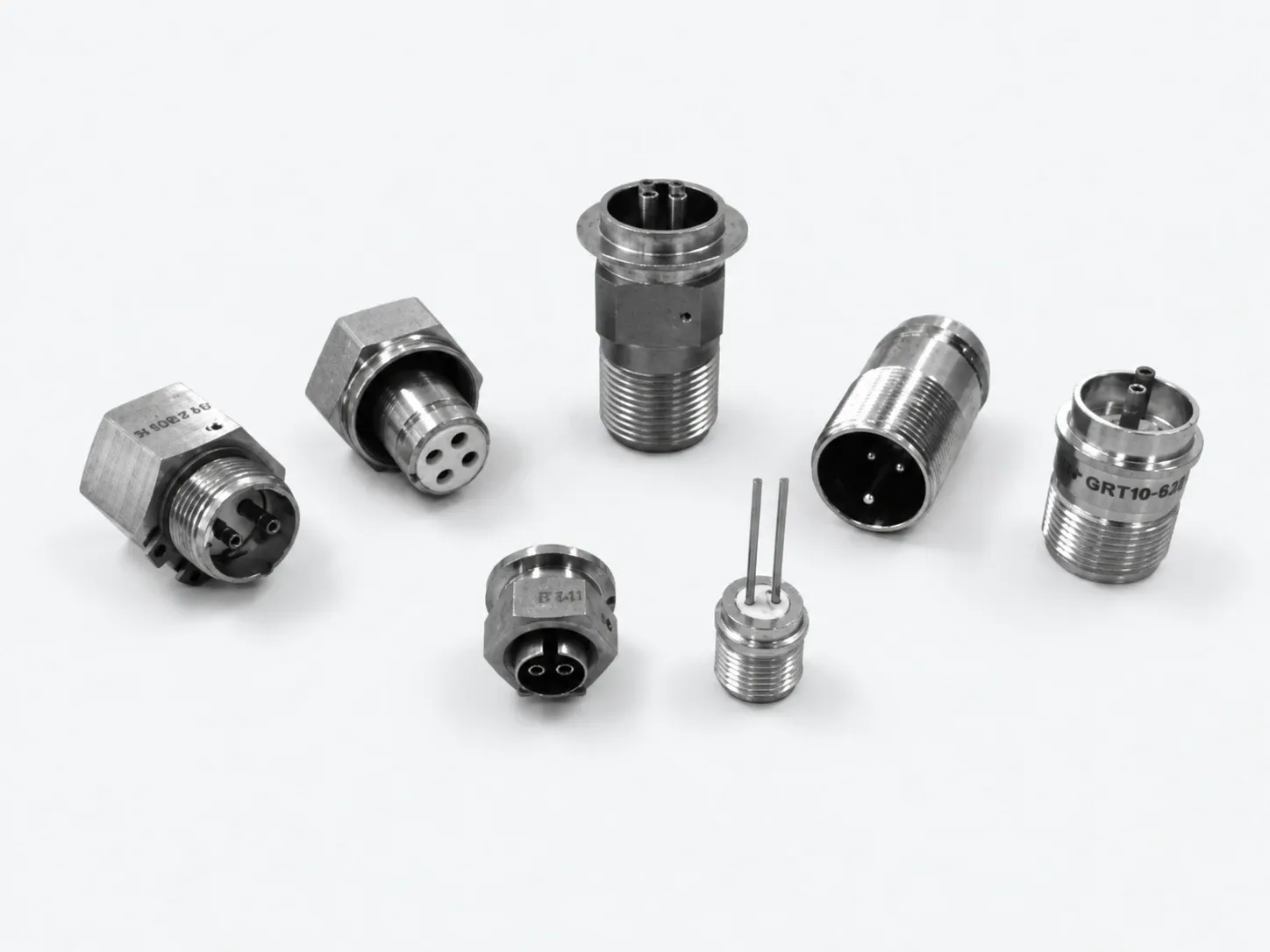
| to 350–400 °C | Threaded connectors with inorganic insulation | PRG |
| to 500 °C | Stainless connectors with glass insulators, designed to order | GRT |
Questions to answer before selecting
- Continuous temperature, peak temperature and time at peak.
- Thermal cycling range and number of cycles.
- Vibration at temperature.
- Whether the connector must be sealed or hermetic.
- The cable type and how it will be terminated.
- Whether the circuit is a thermocouple (see thermocouple connectors).
Tell us the temperature profile and we will propose a connector — GRT is designed to your interface.