Contacts and electrical · Updated 2026-09-28
Thermocouple Connectors and Compensating Contacts
A thermocouple produces a small voltage from the junction of two different metals. Every other junction in the circuit also produces a voltage when it is at a different temperature from the reference. A standard copper-alloy connector adds two such junctions — and an error that changes with the connector’s temperature.
The solution: matched contact alloys
If each contact is made of the same alloy as the thermocouple leg it carries — for example chromel for the positive leg and alumel for the negative leg of a type K thermocouple — the connector adds no new thermoelectric junctions, and the measurement stays accurate even when the connector is hot.
Options in our range
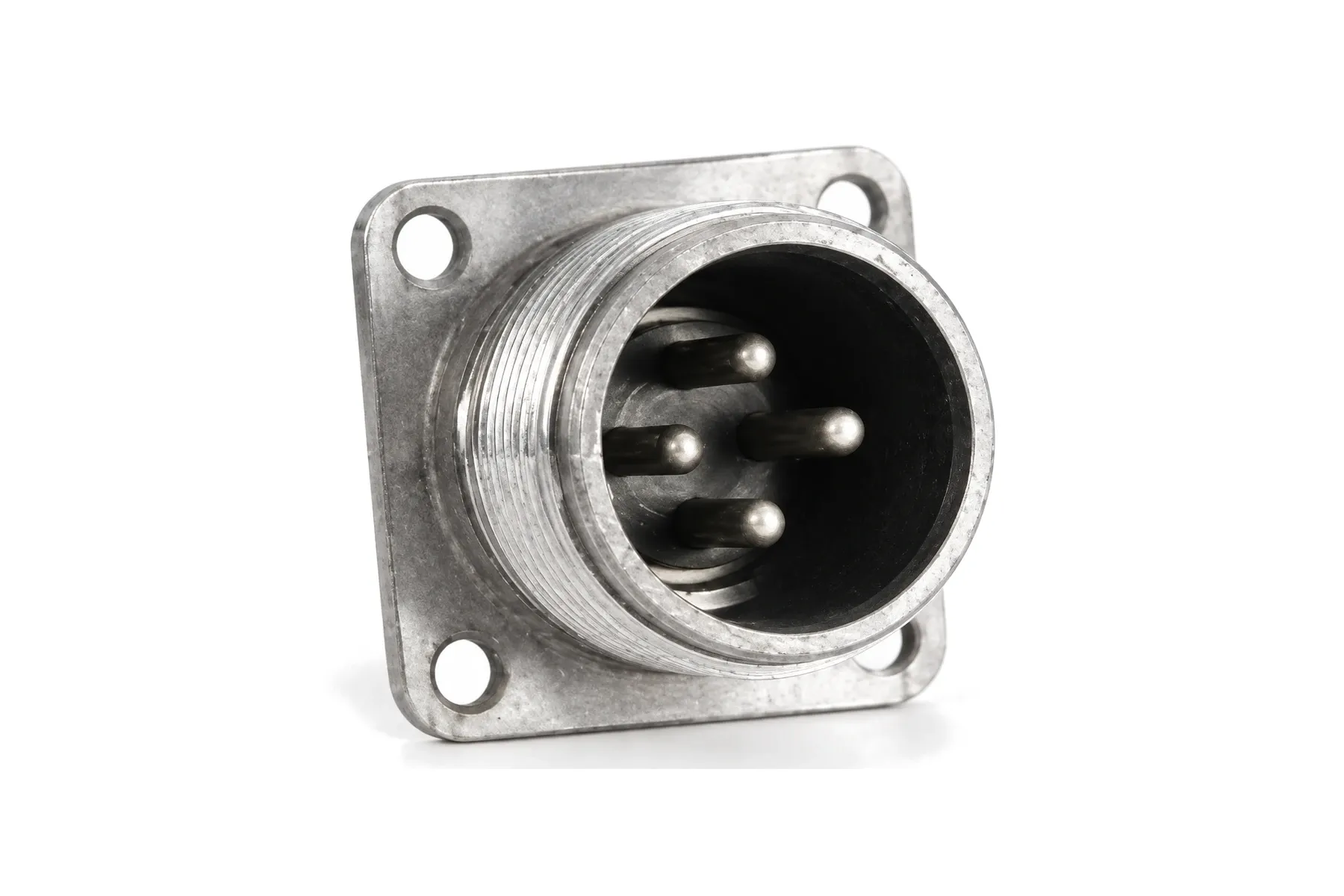
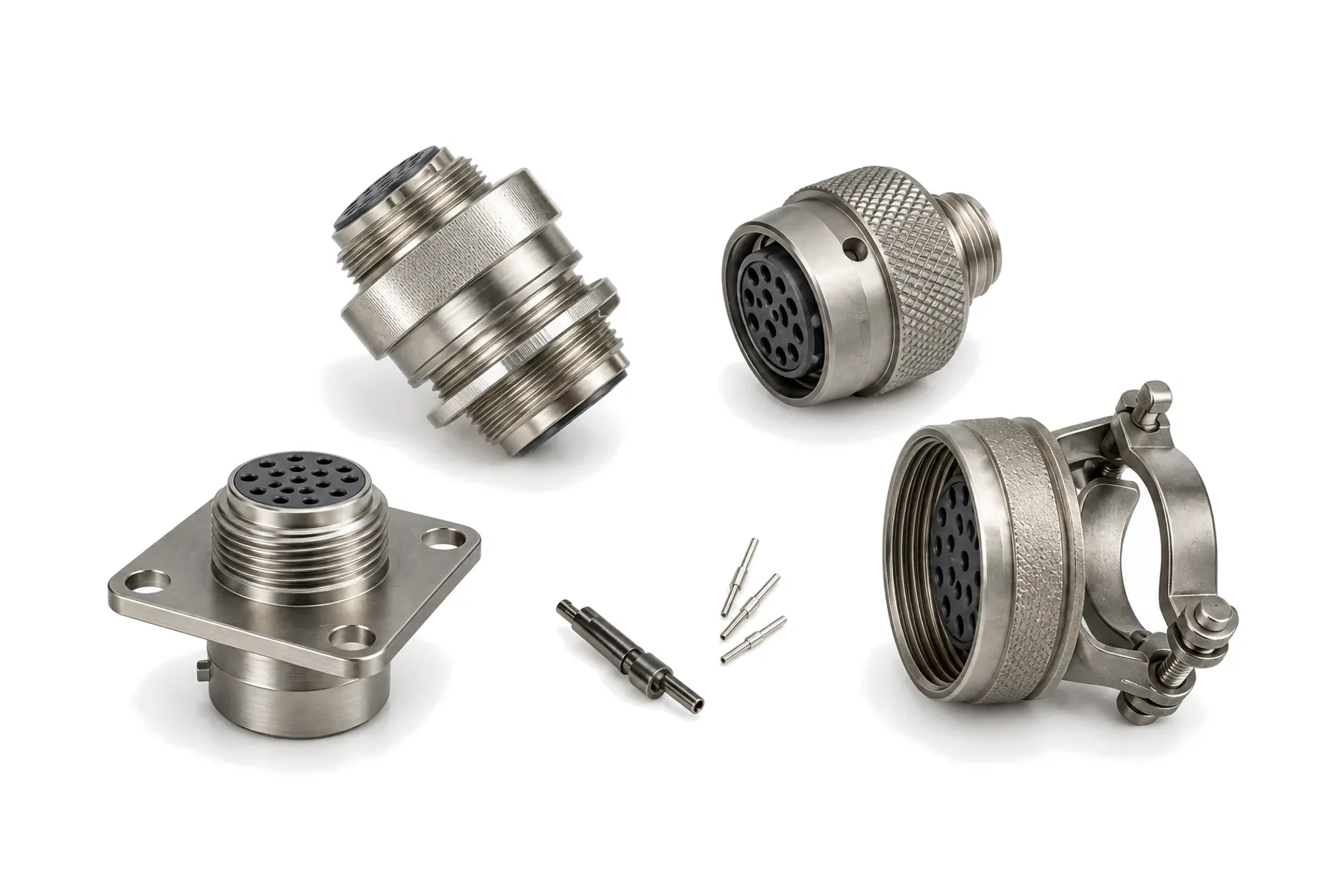
- PPH25M / PPH25AM thermocouple connectors with chromel (X), alumel (A) and nickel-copper (K) contacts, 4 to 47 contacts, −60 to +200 °C (PPH25M).
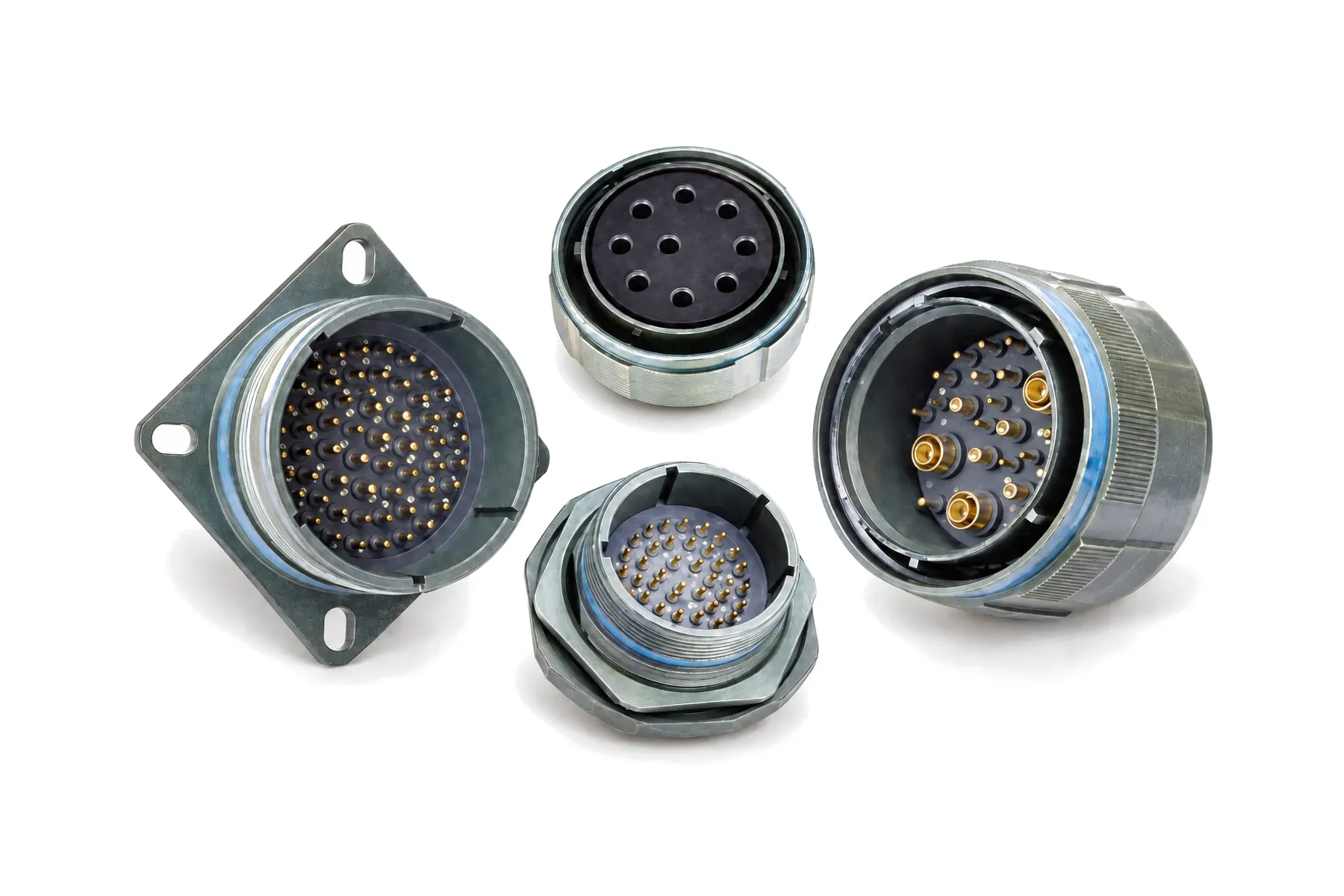
- 38999-type connectors with thermocouple contacts: GJB599 Series I part numbers can include n pairs of chromel/alumel contacts (suffix Rn) mixed with standard contacts; J599 Series III also offers thermocouple contacts.
How to specify
- Thermocouple type (K, N, J, T …) and the alloy for each leg.
- Number of thermocouple pairs and any ordinary contacts in the same connector.
- Connector temperature range and whether it sees rapid temperature changes.
- Accuracy budget for the connection.
- Cable type (extension or compensating cable).
Send us the pin-out and we will match contact alloys to each position.