Engines and turbines
GRT serves engine and exhaust sensors; PRG serves engines and gas turbines. PPH25M connects thermocouples for engine and turbine temperature measurement.

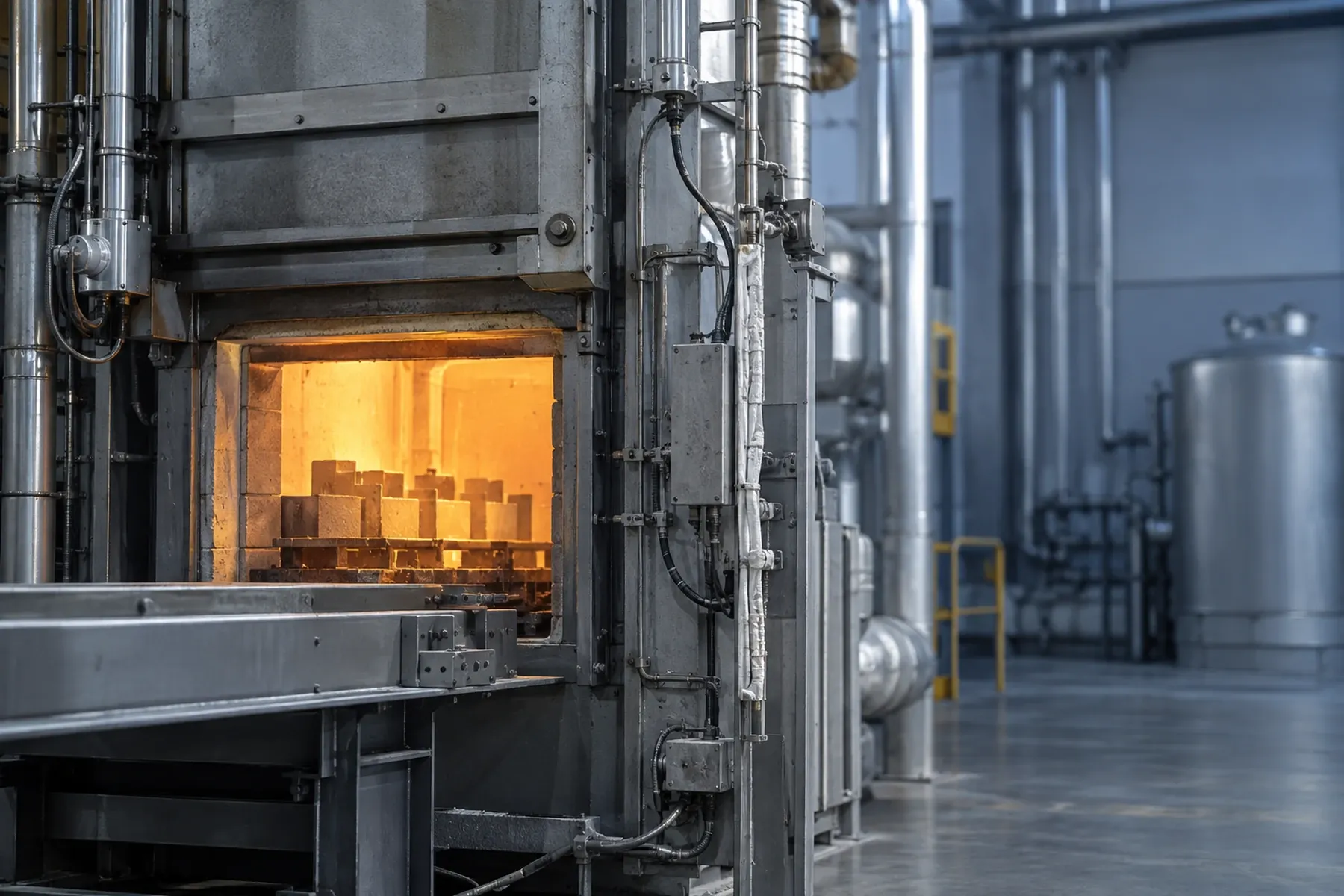
Near engines, turbines, exhausts and furnaces, standard insulation and contact springs fail. High-temperature connectors use glass or ceramic insulation and stainless-steel shells.
GRT connectors run to +500 °C, PRG to +400 °C and J599 Series III MT to +260 °C; PPH25M thermocouple connectors carry temperature signals without adding error.
GRT, with models rated 500, 350 or 300 °C
PRG standard layouts; +350 °C for the 25 / 50 A version
J599 Series III MT high-temperature version
PPH25M thermocouple contacts in chromel, alumel and nickel-copper
GRT serves engine and exhaust sensors; PRG serves engines and gas turbines. PPH25M connects thermocouples for engine and turbine temperature measurement.
GRT serves industrial furnaces and kilns, while PRG serves furnaces and heat treatment. PPH25M carries thermocouple signals for furnace and kiln measurements.
GRT and PRG serve high-temperature test rigs. PPH25M serves test benches, data acquisition and process temperature monitoring; J599 Series III also offers thermocouple contacts.
GRT runs to +500 °C, PRG to +400 °C and J599 Series III MT to 260 °C.
PRG standard layouts carry 7–10 A to +400 °C; its 25 A and 50 A contacts run to +350 °C. GRT carries 7.5–13 A.
J599 Series III runs from −65 to +200 °C, to +175 °C with cadmium and T finishes, and to 260 °C in the MT version.
PPH25M matches chromel, alumel and nickel-copper contacts to the thermocouple legs in 4 to 47 positions, rated +200 °C for ≥ 600 h; PPH25AM is rated +150 °C for ≥ 1000 h.
Swipe left or right to see all columns.
| Series | Temperature | Contact configuration | Current or contact material | Construction or interface | Datasheet |
|---|---|---|---|---|---|
| GRT | −55 to +500 °C (by model) | 2 to 5 | 7.5–13 A | Hermetic receptacles | PDF, 188 KB |
| PRG | −60 to +400 °C; +350 °C for 25 / 50 A version | 2 to 47 | 7–10 A (25 / 50 A version) | Threaded, shells 20–60 | PDF, 198 KB |
| PPH25M | +200 °C ≥ 600 h (PPH25M) / +150 °C ≥ 1000 h (PPH25AM) | 4 to 47 | Chromel, alumel, nickel-copper | Threaded, M24 to M64 | PDF, 170 KB |
| J599 Series III | −65 to +200 °C; 260 °C MT version | 184 insert arrangements | 26 to 10 (2–33 A) | Triple-start thread | PDF, 339 KB |
Give continuous and peak temperature, time at peak, thermal cycling and vibration at temperature.
Separate power, signal and thermocouple circuits; for thermocouples, give the type and each leg alloy. Matched alloys add no thermoelectric junction at the connector.
GRT uses stainless-steel shells and glass-insulated receptacles, and its hermetic versions are tested at 0.1 MPa. Give the interface and mounting dimensions.
Give the cable type and pin-out; PRG offers straight or 90° backshells, shielded or unshielded. We will review your project.
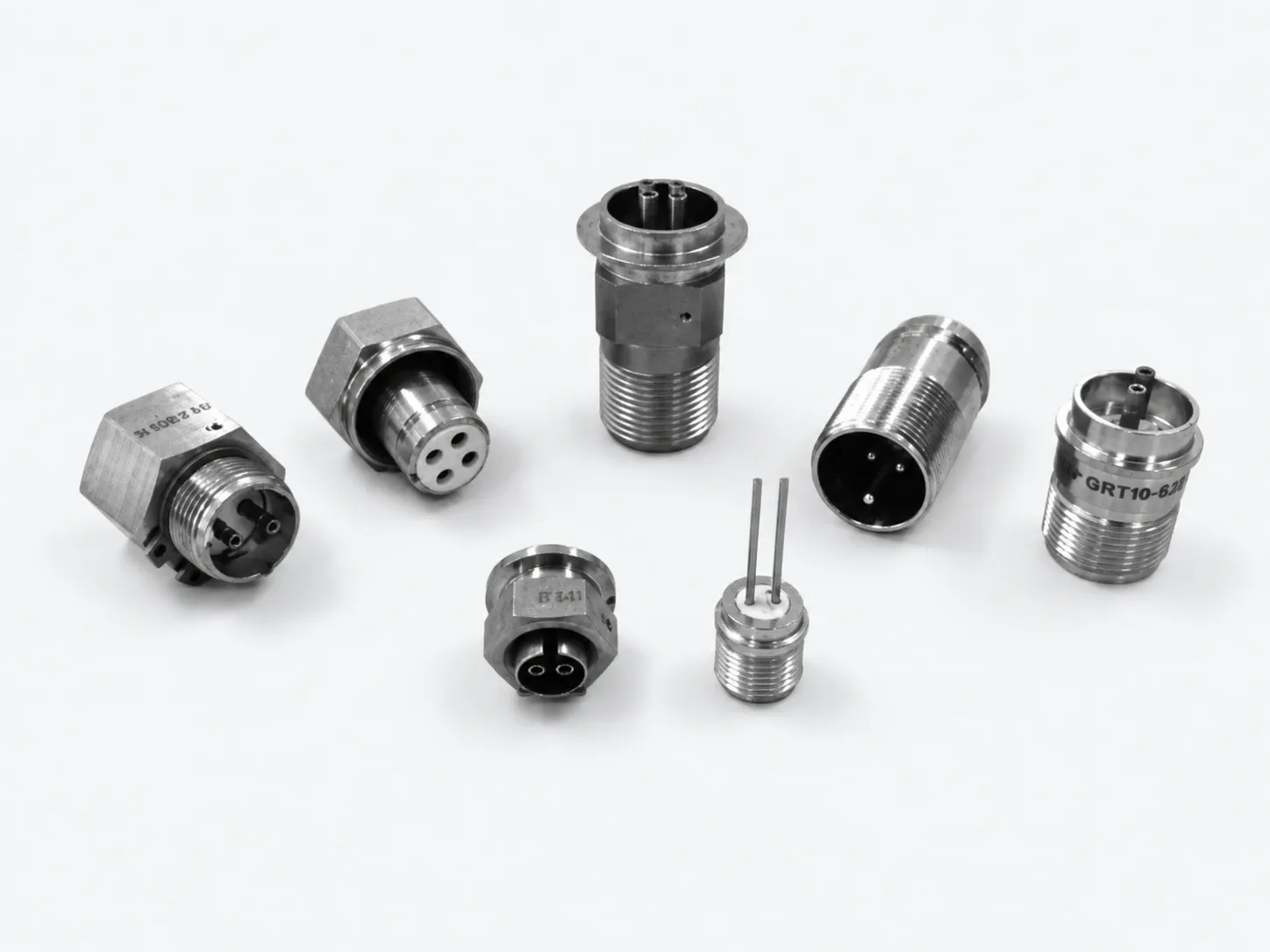
−55 to +500 °C · stainless steel · hermetic receptacles
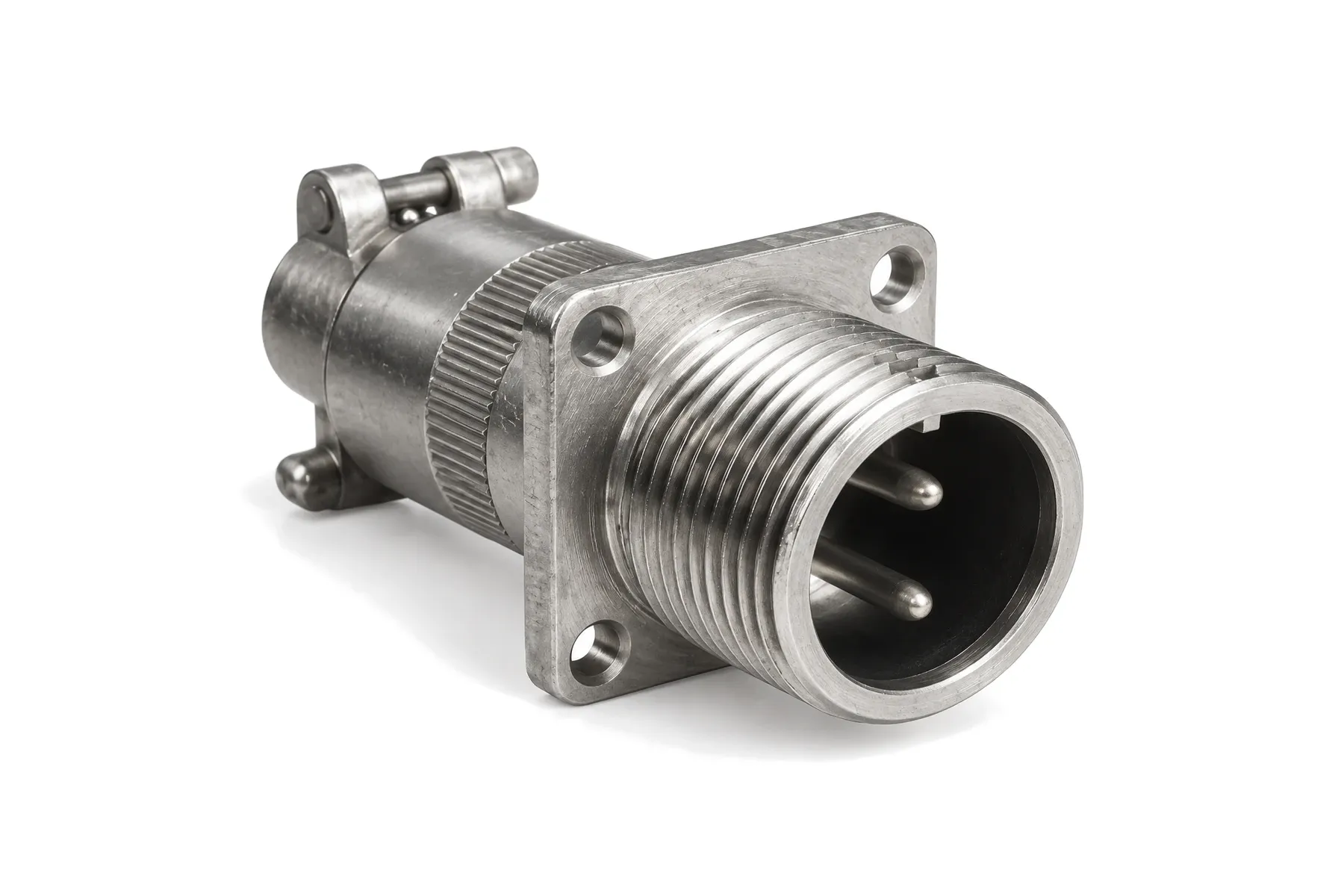
Up to +400 °C · 2 to 47 contacts · shielded or unshielded
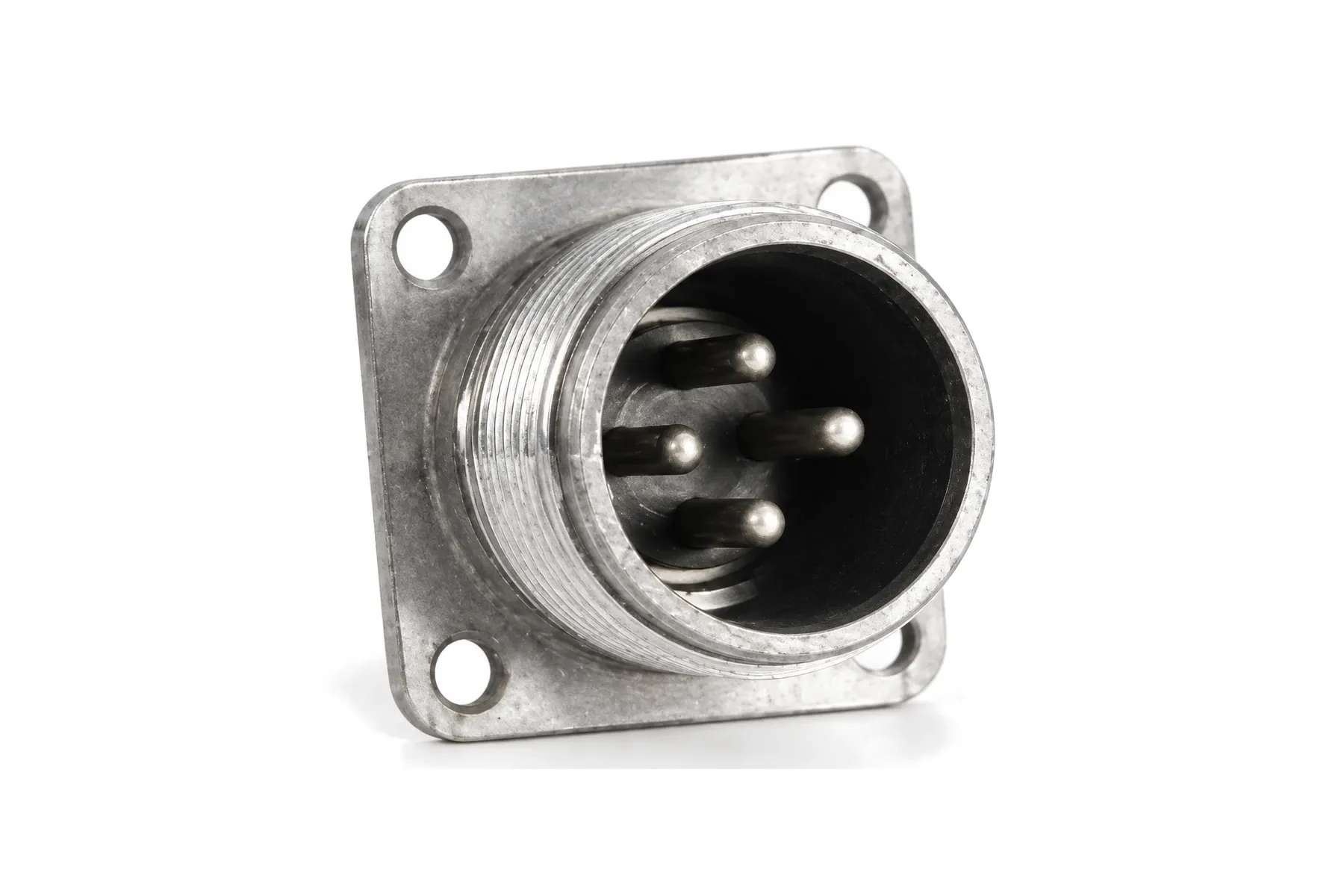
Chromel / alumel contacts · 4 to 47 contacts · −60 to +200 °C
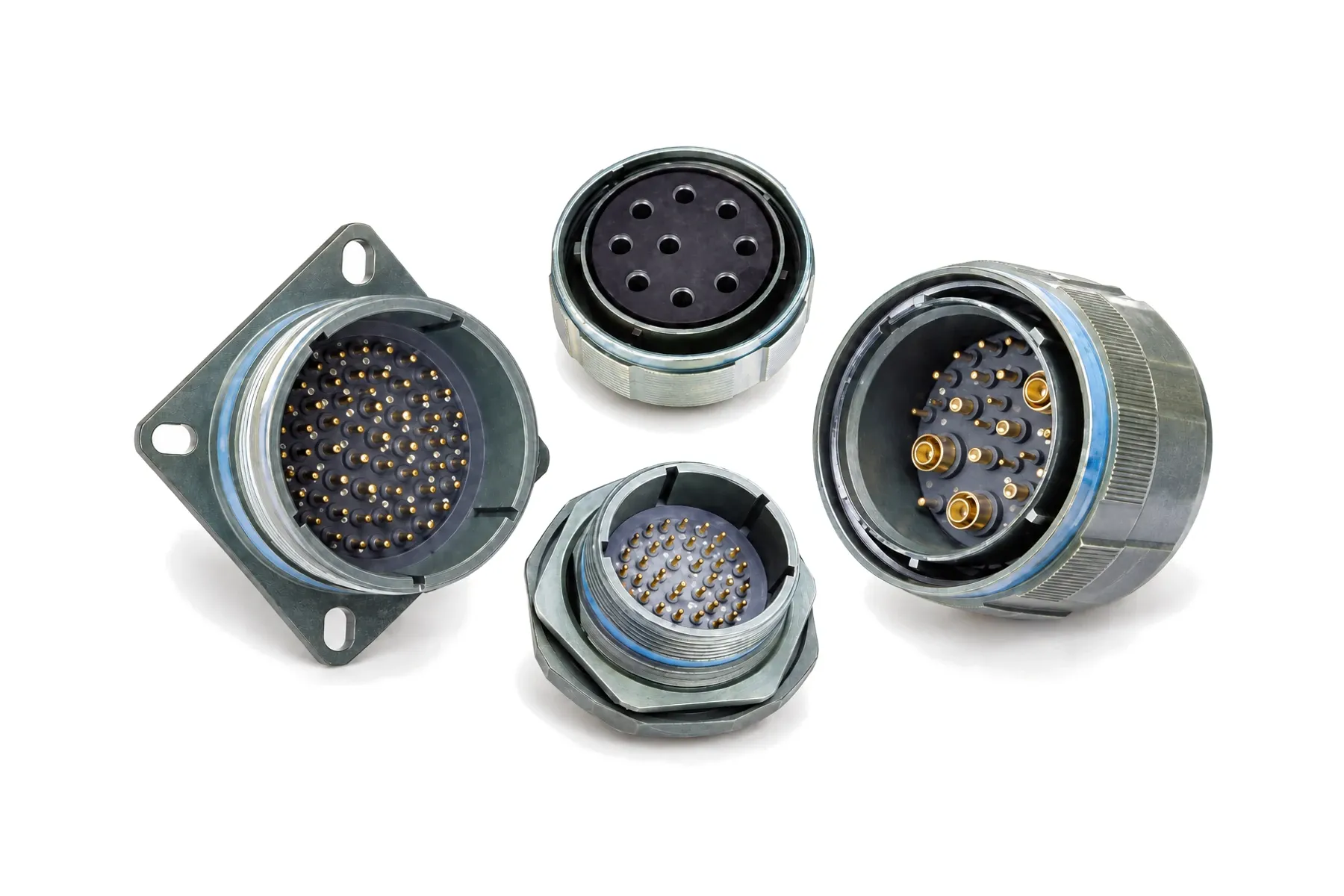
38999 Series III type · shell sizes 9–25 · 184 insert arrangements
All series can be customized — contact counts, cable lengths, materials and finishes.
How insulation, contact and shell materials limit connector temperature, and how to choose between 200 °C, 260 °C, 400 °C and 500 °C connectors.
Why copper contacts add error to thermocouple circuits, how chromel, alumel and compensating-alloy contacts fix it, and how to specify them.
Up to +500 °C. GRT is built to order, with models rated 500, 350 or 300 °C; send your temperature profile and drawing.
PRG standard layouts carry 7–10 A to +400 °C; its 25 A and 50 A contacts run to +350 °C.
J599 Series III in the MT high-temperature version.
Contacts matched to each thermocouple leg add no thermoelectric junction. PPH25M offers chromel, alumel and nickel-copper contacts in 4 to 47 positions.
Send continuous and peak temperature, time at peak, vibration, sealing, cable and pin-out, and we will review your project.
Part number, drawing, pin-out or a short description of your application.
Our engineers match the configuration and reply with a drawing and quotation.
Samples are built to order. The minimum order quantity is 10 pieces, and samples and production orders each take 4–8 weeks. Third-party testing to your specification is available on request.
You test the samples in your own equipment and approve them.
Production follows the approved sample configuration, with machining, molding, plating and assembly in our own Shenyang factory.
Send your part number, pin-out or drawing. Every inquiry is acknowledged by email within 1 business day, and an engineer follows up with a matched configuration, drawing or quotation.