Sealing and environment · Updated 2026-09-28
Selecting High-Current Power Feedthroughs for Vacuum and Pressure Vessels
Current and stud size
Pick the stud by continuous current and the lug or bus bar it must accept. Our standard studs cover 105, 275, 500, 750 and 1000 A, with stud threads from 1/4-20 UNC to 7/8-14 UNF.
Voltage
Standard studs are tested at 5000 VAC. For vacuum applications, remember that insulation surfaces inside the chamber may see lower breakdown voltages at intermediate pressures — keep creepage distances generous.
Sealing method
| Method | Body | Pros | Consider |
|---|---|---|---|
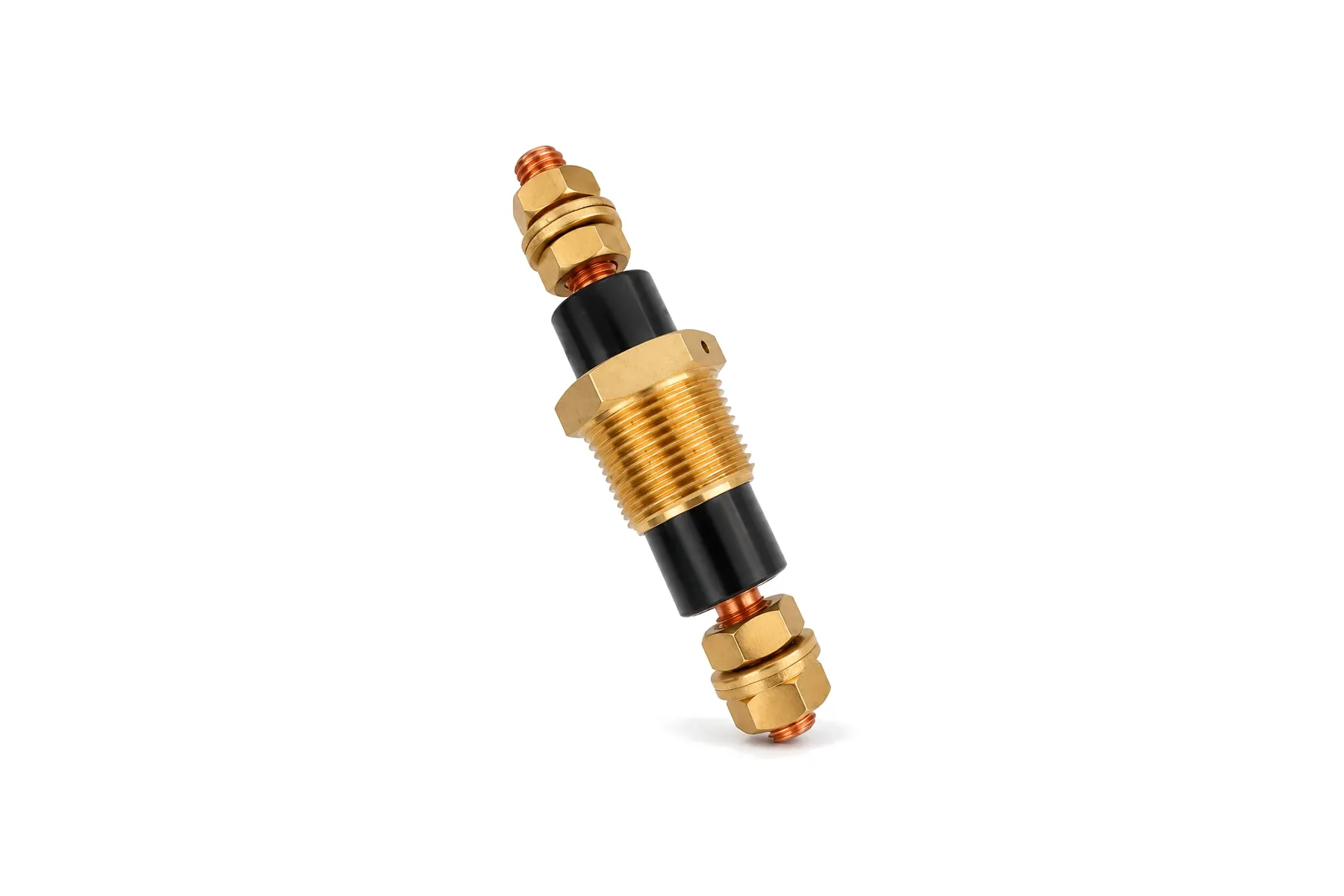
| NPT tapered thread | Brass | Simple installation in a threaded port | Thread sealant; limited re-use |
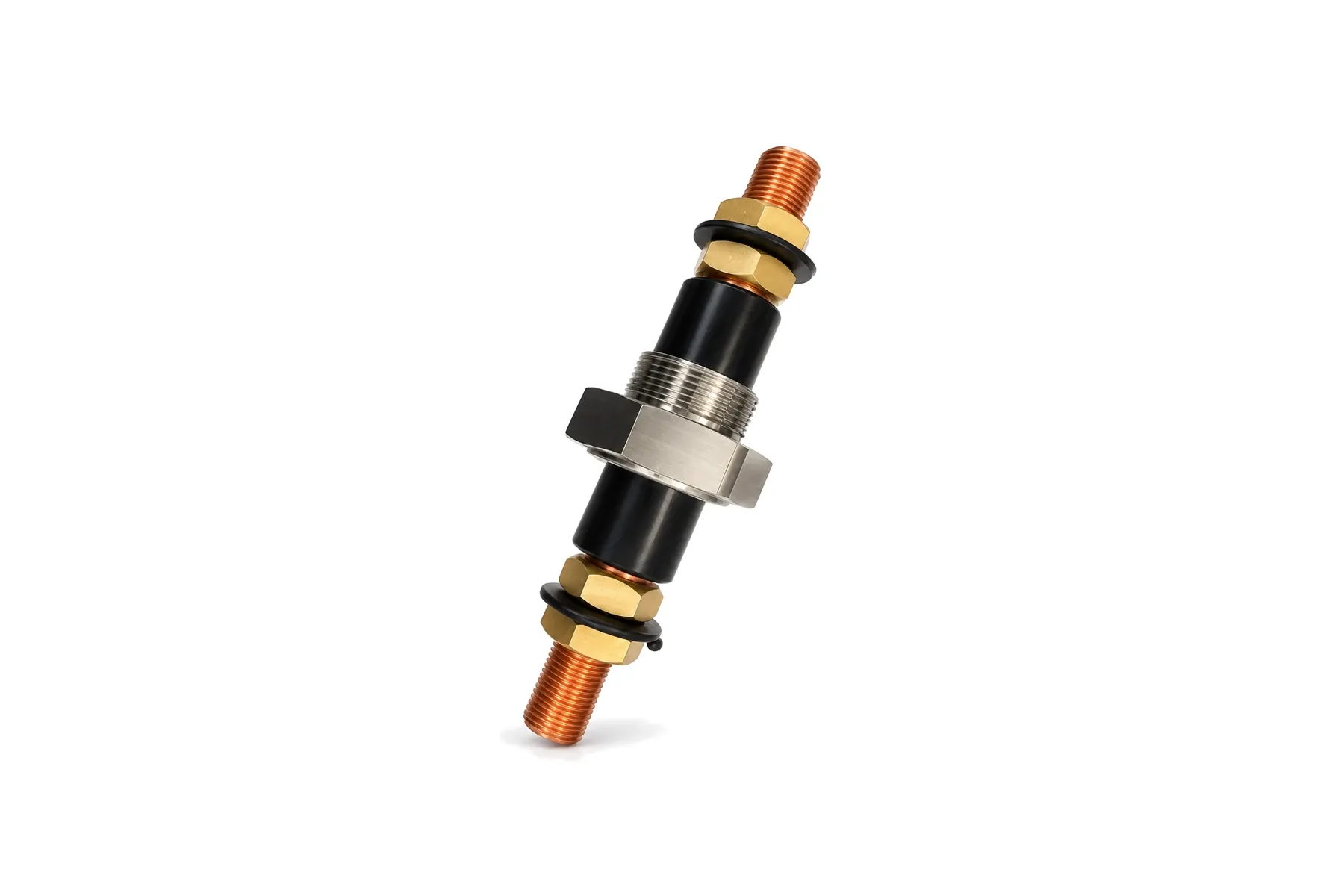
| O-ring | Stainless steel | Re-usable, choice of elastomers | Groove and surface finish of the port |
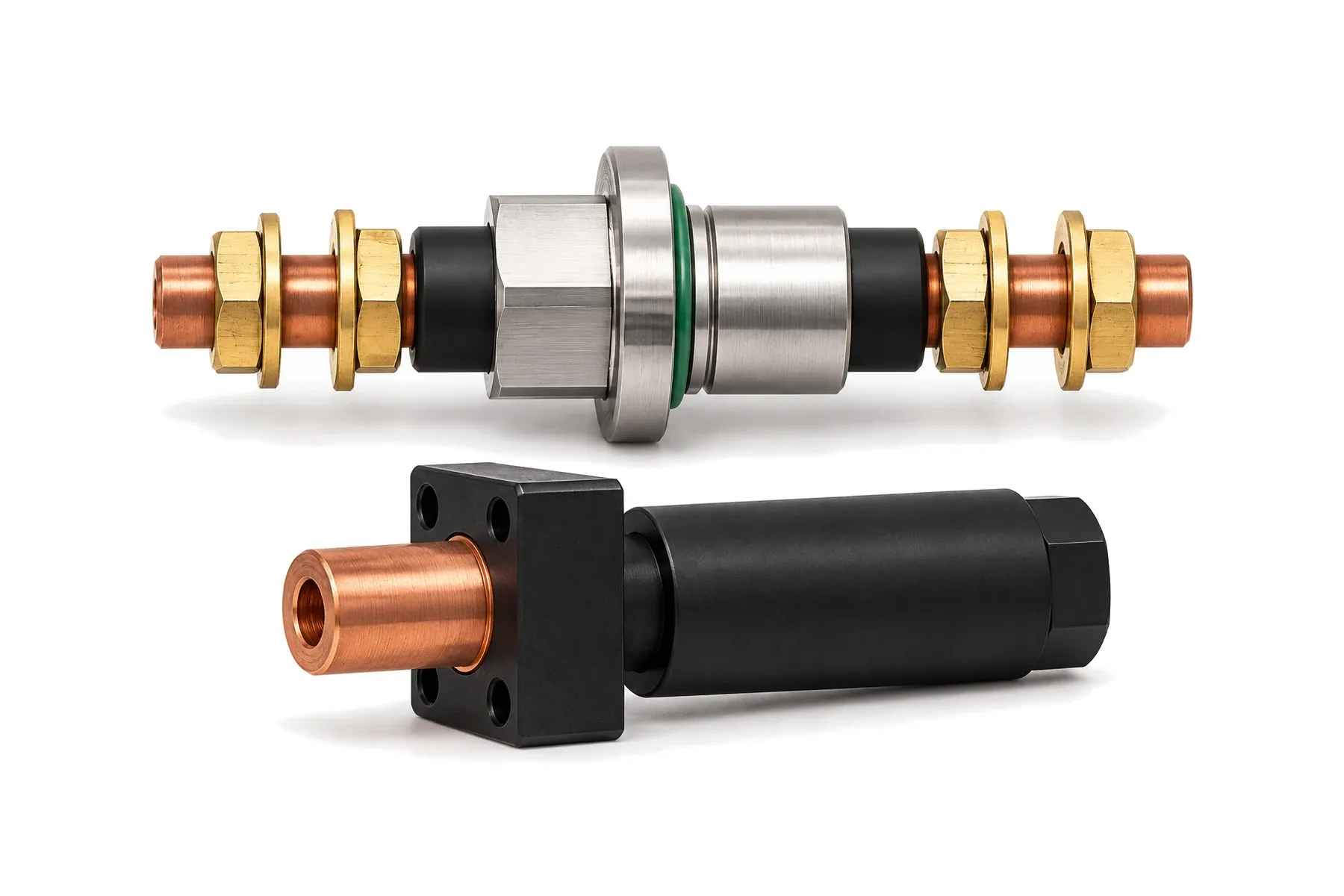
| Flange | Custom | Large currents, crimp lugs | More space |
O-ring material sets temperature and media compatibility: fluorosilicone (−40 to +130 °C), FKM (−20 to +130 °C), HNBR on the 1000 A model.
Leak rate and testing
Our studs have a leak rate below 1 × 10⁻⁸ Pa·m³/s at 0.1 MPa differential; every unit is pressure-tested at 0.8 MPa and type tests cover ≥ 8 MPa. See leak rates explained.
What to send us
Current, voltage, temperature, pressure or vacuum level, wall thickness and port thread, and the connection on each side. We design custom feedthroughs to these requirements.