Micro-D and Nano-D · Updated 2026-09-28
Micro-D vs Nano-D Connectors: How to Choose
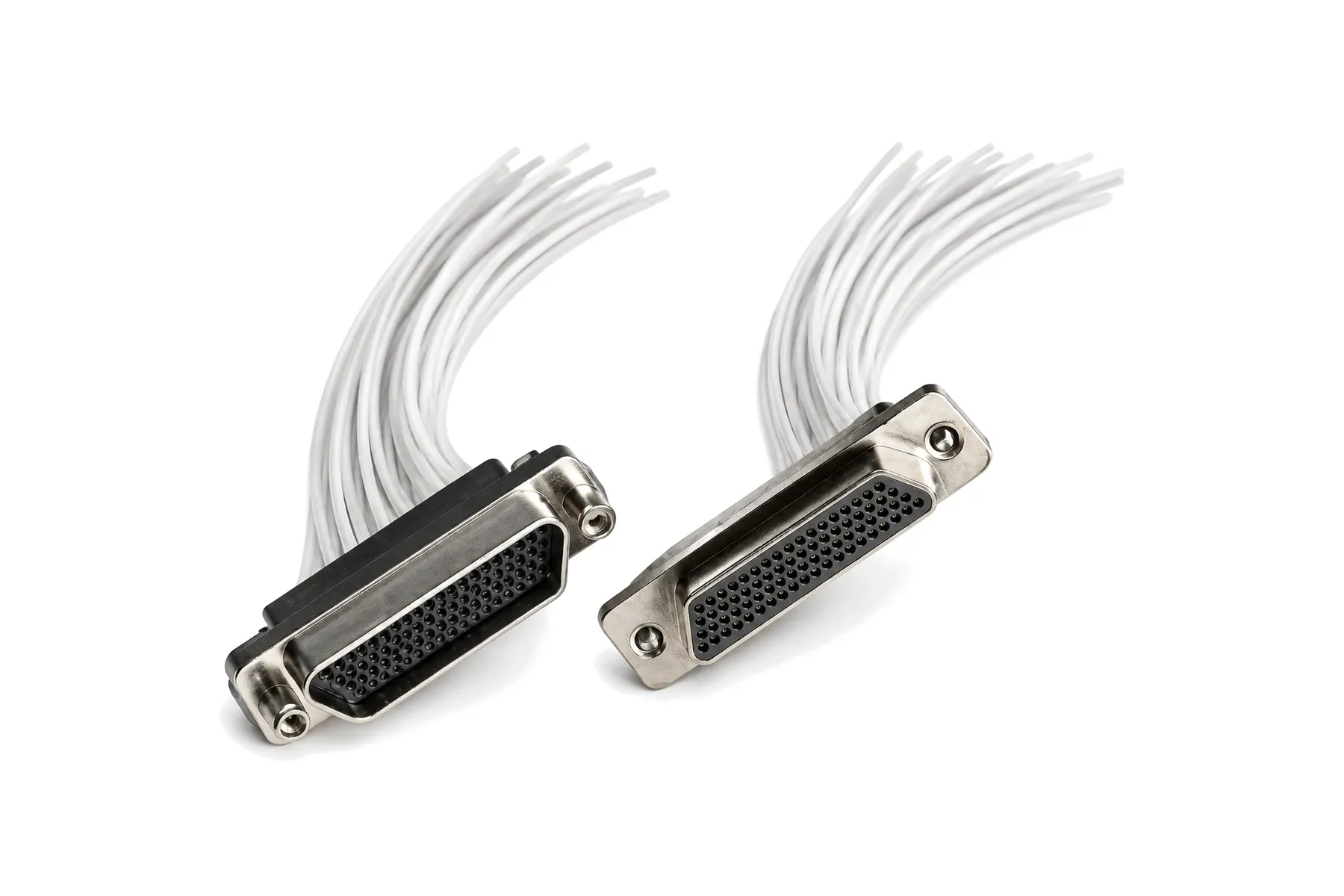
Micro-D and Nano-D connectors are rectangular connectors with gold-plated twist-pin contacts, used where space and weight are tight and reliability under vibration matters.
Key differences
| Micro-D | Nano-D | |
|---|---|---|
| Contact pitch | 1.27 mm (0.050 in) | 0.635 mm (0.025 in) |
| US specification | MIL-DTL-83513 | MIL-DTL-32139 |
| Chinese specification | GJB 2446 | — |
| Typical current per contact | 3 A | 1 A |
| Typical use | Signal and low-power circuits in compact units | Very dense signal wiring, sensors, small modules |
When to choose Micro-D
Micro-D is the workhorse: our J30J range covers 5 to 144 contacts, 3 A per contact, many variants and a wide range of backshells and pre-wired assemblies. Our J30J series follows GJB 2446, the counterpart of MIL-DTL-83513. Variants include:
- HJ30J — 100 Ω high-speed version for differential signals;
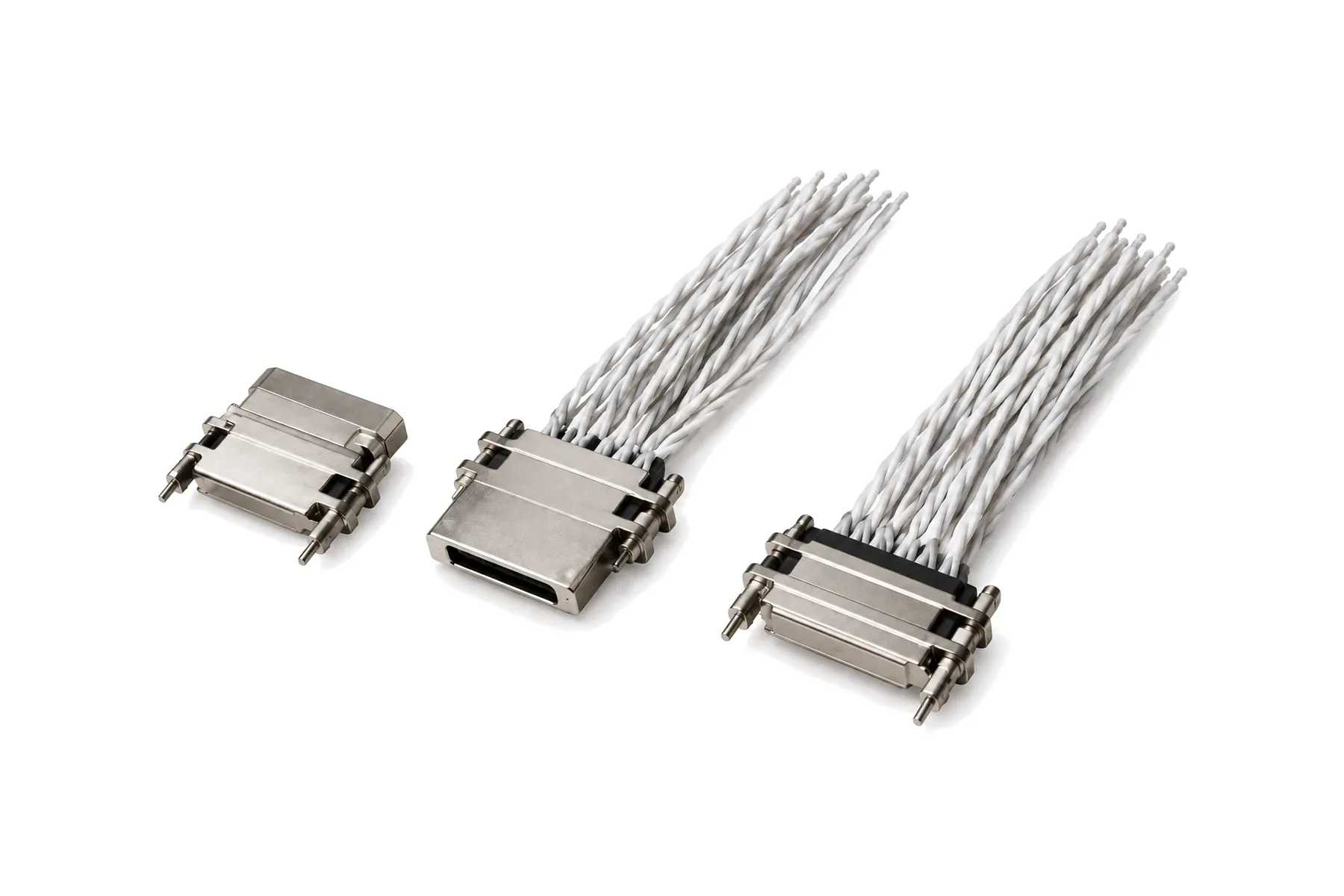
- J30JZ — compact twist-pin version at about 40 % of the J30J volume;
- J30J mixed power — 20 A power contacts beside 3 A signal contacts.
When to choose Nano-D
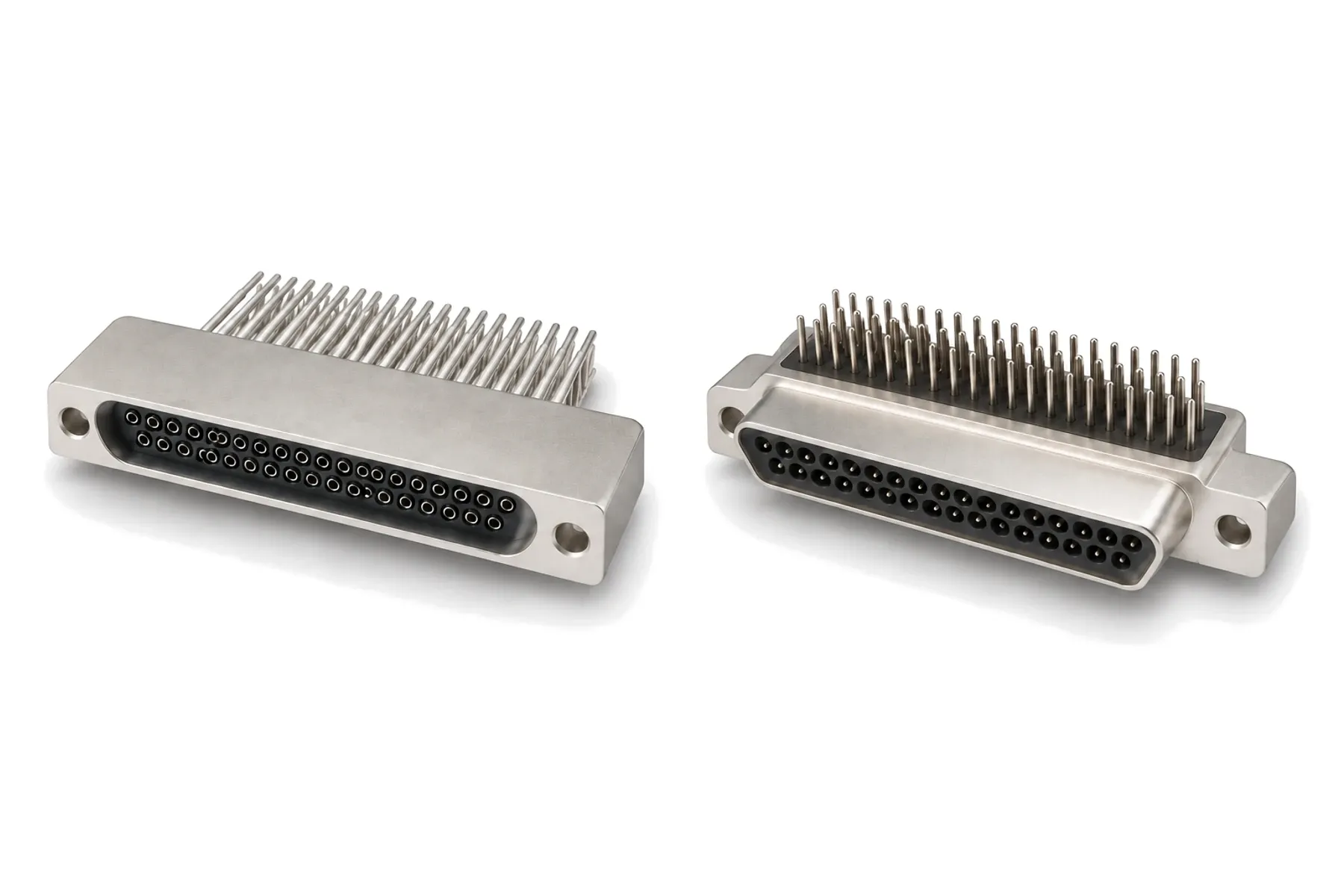
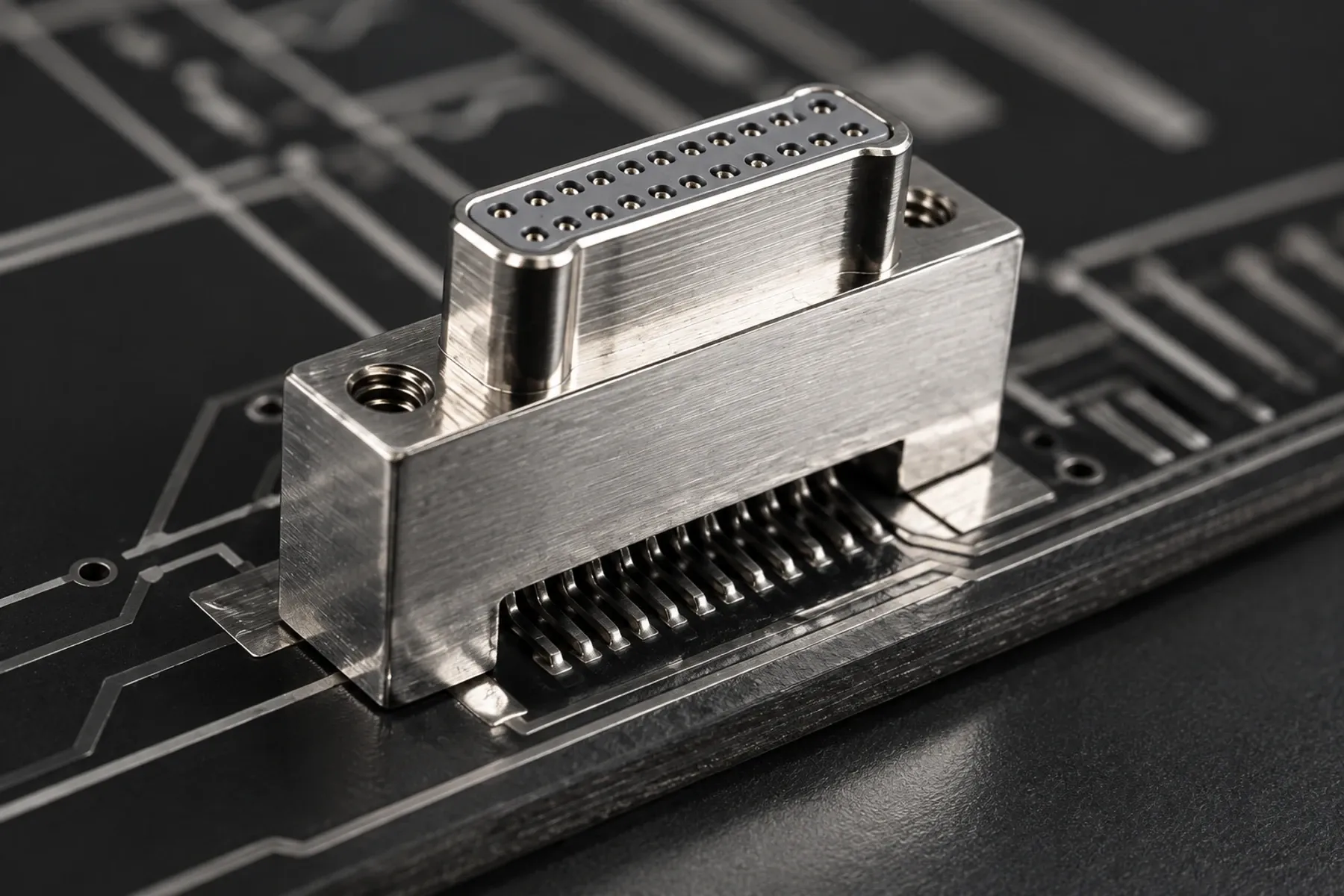
Nano-D halves the pitch. Choose it when a Micro-D will not fit, currents are low and the harness uses fine wire. Our J7245 series is a Nano-D type with PCB-mount versions.
Things to check
- Current: Micro-D contacts are typically rated 3 A; Nano-D around 1 A.
- Wire size: Micro-D crimp contacts take about 0.035–0.15 mm² wire; Nano-D finer.
- Mating cycles: standard versions are rated 500 cycles; J30JZ twist-pin versions are rated for more.
- Termination: pre-wired (pigtail), solder cup, straight or right-angle PCB.
- Mating interface: if you must mate an existing MIL-DTL-83513 part, send us the part number — we propose the matching configuration and supply samples for your mating test.