Subsea and marine · Updated 2026-09-28
Wet-Mate vs Dry-Mate Underwater Connectors
The term “wet-mate” is used loosely in the industry. Being clear about what you need avoids expensive surprises.
Three levels of mating
- Dry-mate: the connector must be dry and clean when mated, usually on deck or in a workshop. After mating it can be submerged to its rated depth.
- Wet-mateable (splash or surface wet-mate): the connector can be mated with water on the contact faces — on a wet deck, in rain or at the surface. Water is displaced as the halves close. This is what we mean by wet-mateable.
- Mating at depth: the connector is connected or disconnected while submerged, often by an ROV. This needs special designs with oil-filled, pressure-compensated chambers and is reviewed per project.
How wet-mateable rubber-molded connectors work
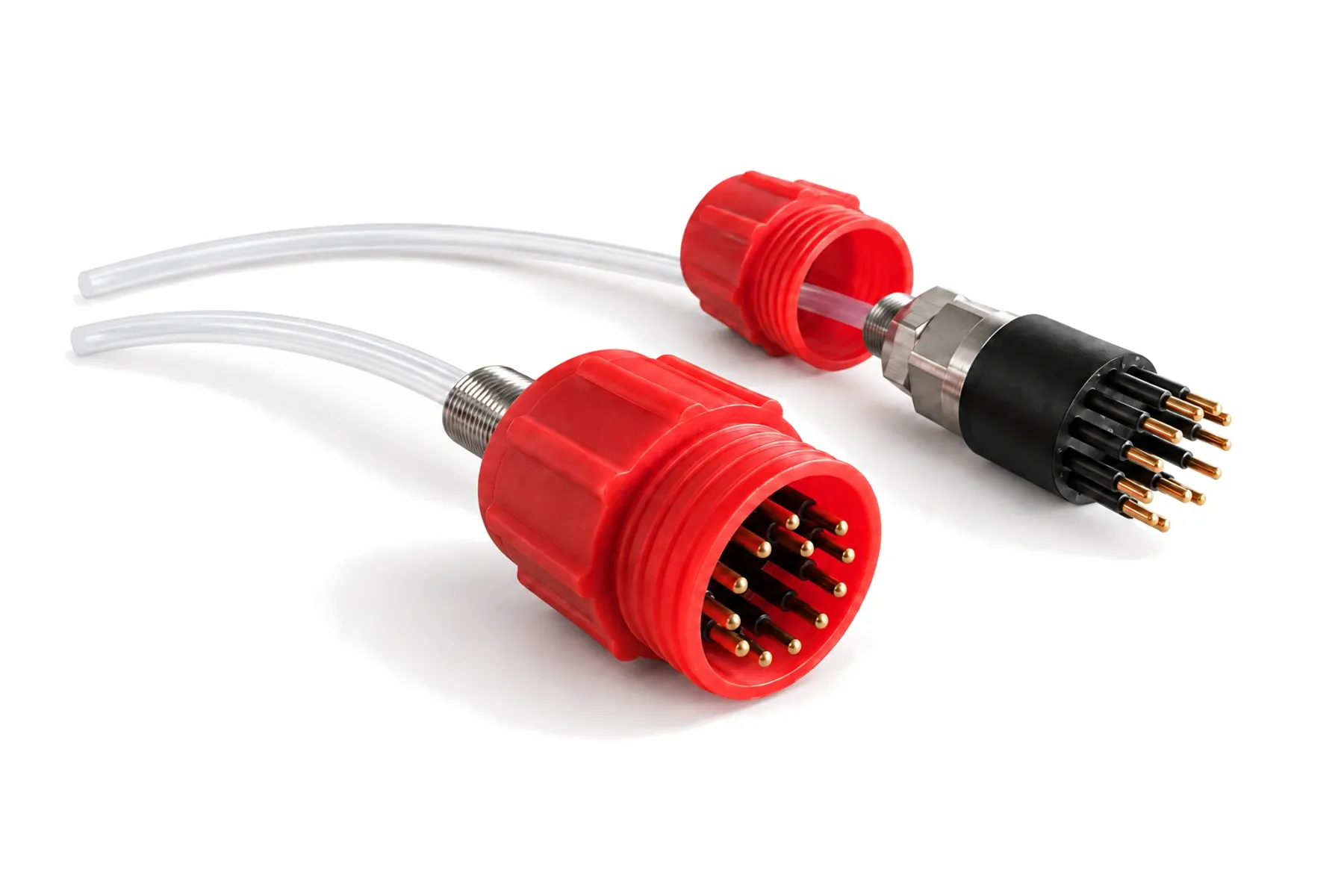
In a rubber-molded connector such as SHX33 or SHX35, each pin is surrounded by a rubber boot. As the socket half slides on, the rubber seals around each contact and squeezes water out of the interface. A thin film of grease helps.
What to specify
- Where mating happens: workshop, deck, surface, or underwater.
- Whether contacts will be energized during mating (usually not recommended).
- Number of mating cycles over the product life.
- Depth, pressure and temperature (see depth and pressure ratings).
Our SHX33, SHX34, SHX35, SHX30 and SHX27 connectors can be mated with water on the contact faces. If you need to mate or unmate while submerged, tell us the depth and conditions and we will review it for your project.