Contacts and electrical · Updated 2026-09-28
Choosing Connector Contact Size by Current and Wire Gauge
Reference table (38999-type crimp contacts)
| Contact size | Pin diameter | Rated current | Wire range |
|---|---|---|---|
| 22D | 0.76 mm | 5 A | AWG 22–26 (0.13–0.33 mm²) |
| 20 | 1.02 mm | 7.5 A | AWG 20–24 (0.20–0.52 mm²) |
| 16 | 1.58 mm | 13 A | AWG 16–20 (0.52–1.31 mm²) |
| 12 | 2.41 mm | 23 A | AWG 12–14 (2.08–3.31 mm²) |
| 10 | 3.20 mm | 33 A | AWG 10 (5.26 mm²) |
For higher currents, dedicated power connectors are used: J599HV contacts run from 80 A (size 6) to 300 A (size 4/0), and HMS31 5015-type contacts reach 150 A (size 0).
Step by step
- List every circuit with its continuous current. Include peak and duty cycle for motors and heaters.
- Choose the wire first. The wire size is set by current, voltage drop and your harness standard.
- Pick the contact that accepts that wire and whose rating covers the current.
- Check derating. Contact ratings are for a single contact under standard conditions. When many contacts carry current at once, or the ambient temperature is high, the allowable current per contact falls. Tell us the load pattern and ambient and we will confirm.
- Group circuits into a layout. Mixed layouts combine sizes — for example 4 × size 12 for power with 16 × size 22D for signal in one shell.
Common mistakes
- Choosing a contact by current alone, then finding the wire is too large for the crimp barrel.
- Forgetting the insulation diameter: the wire must also fit the grommet seal.
- Using spare signal contacts in parallel to carry power — this rarely shares current evenly.
Other contact types
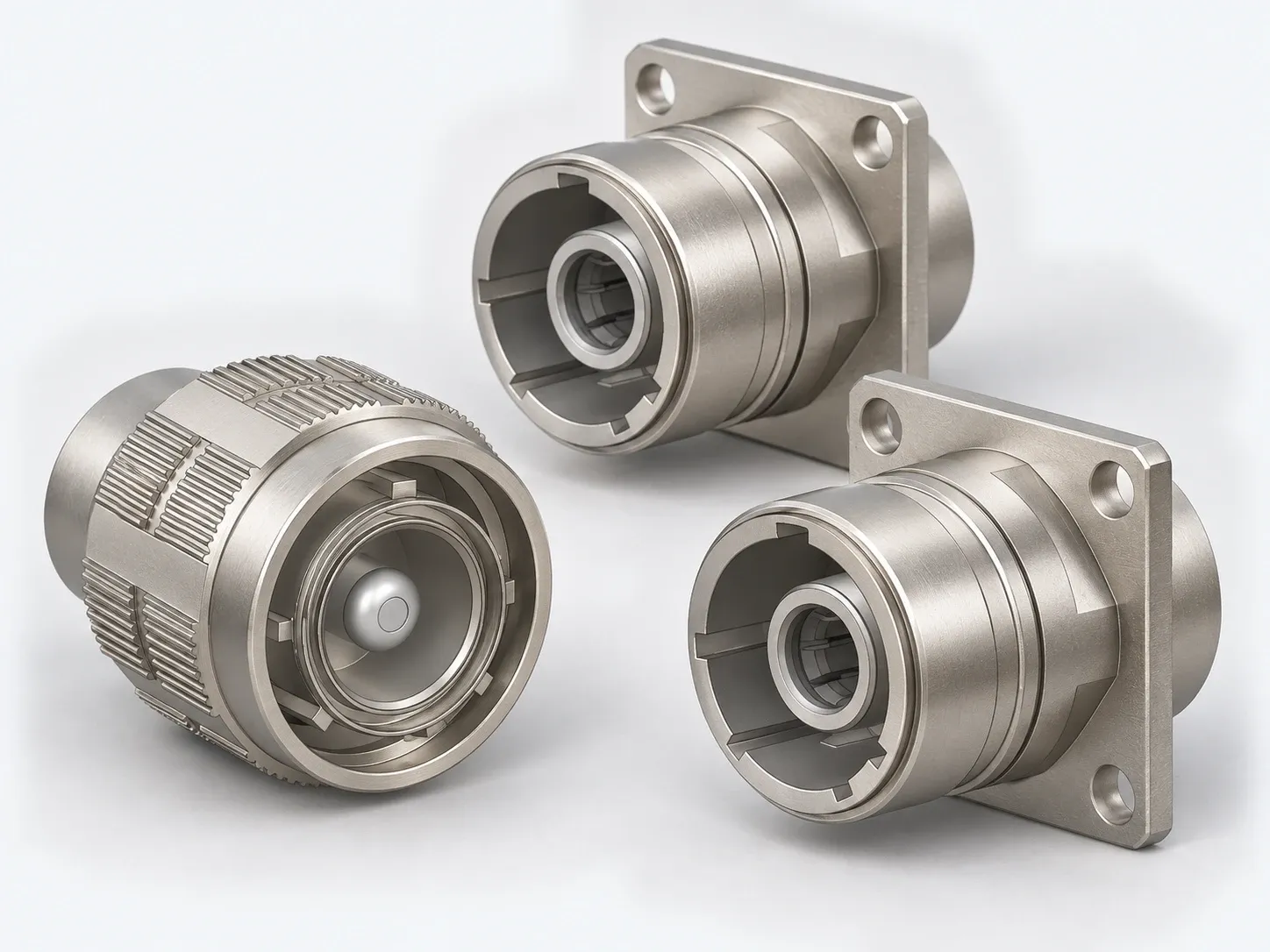
Size 12 and 8 cavities can take coax, shielded, twinax or differential contacts in suitable layouts; fiber contacts are available in sizes 20, 16 and 12. See 38999 fiber-optic and hybrid connectors.