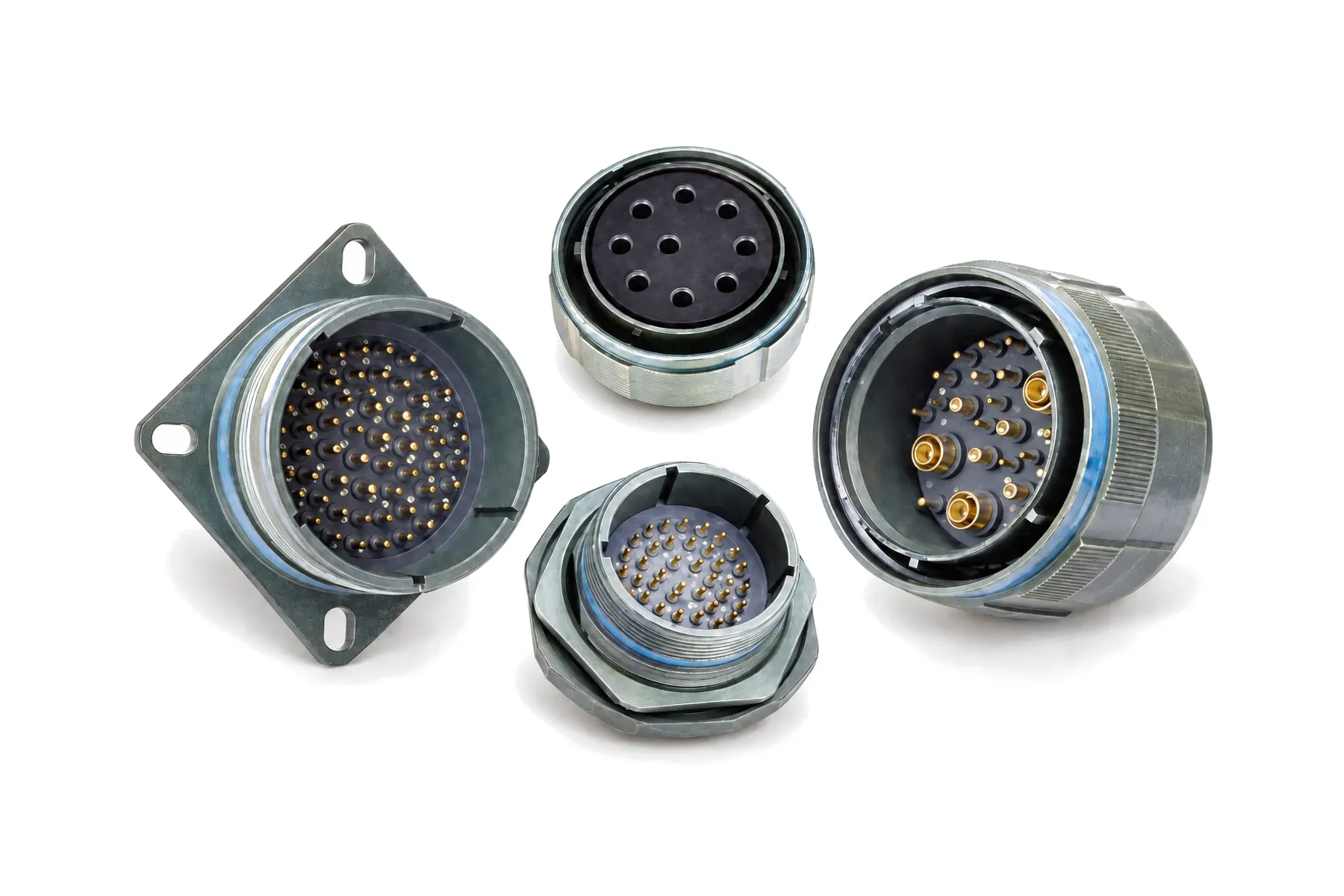
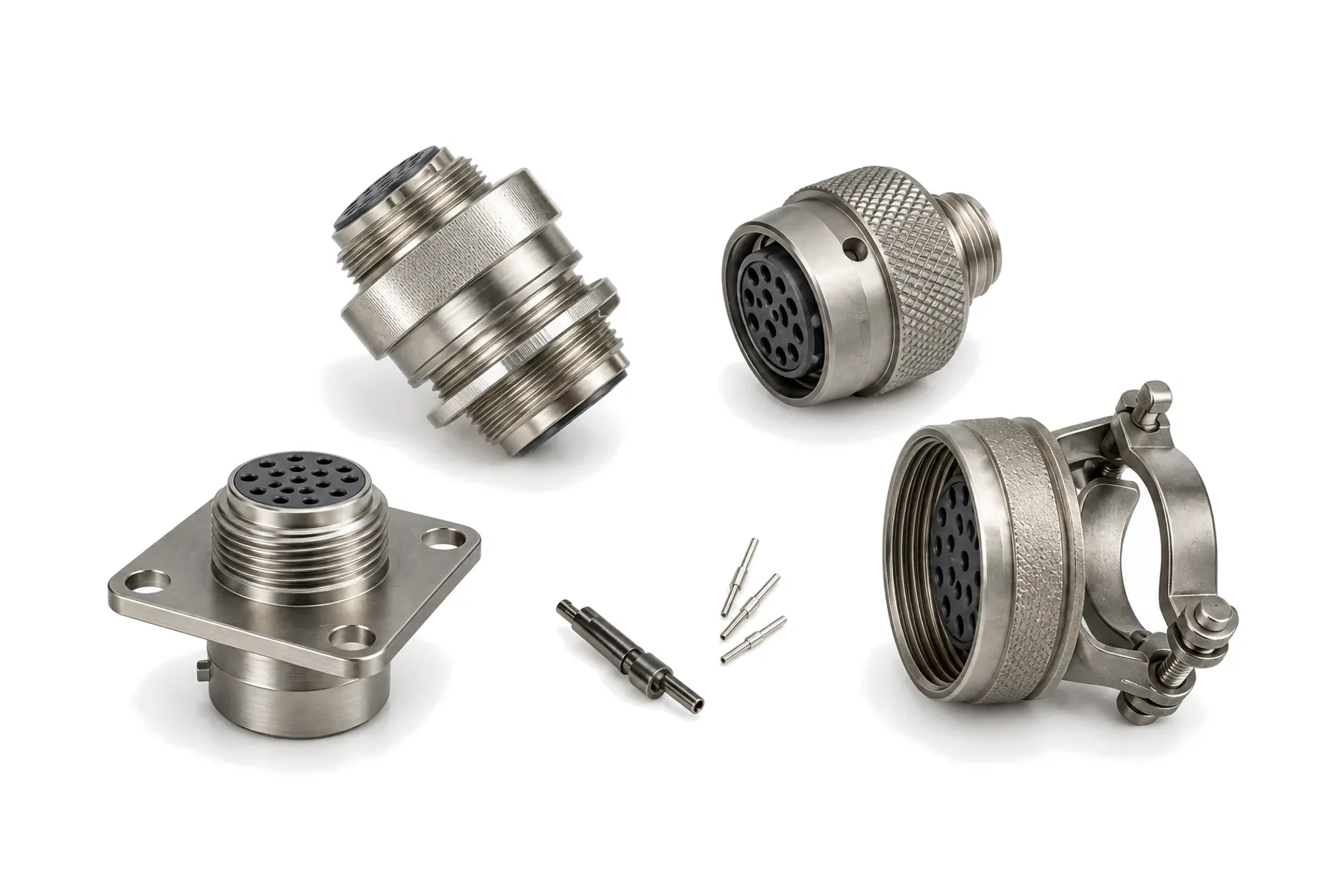
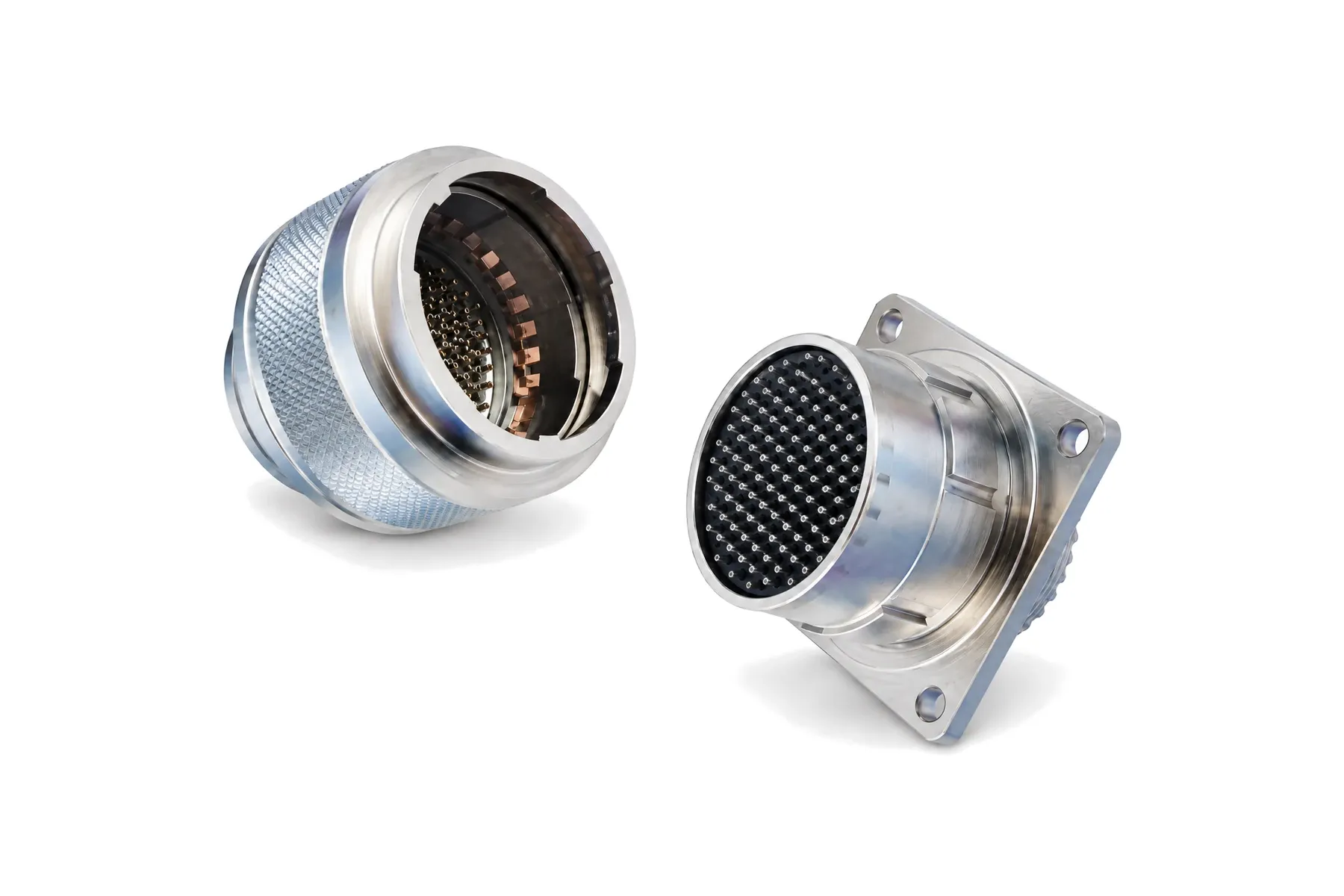
38999-type circular connectors · Updated 2026-09-28
38999 Series I, II, III and IV: What Is the Difference?
Schematic, not to scale.
The 38999 family (MIL-DTL-38999 in the US, GJB 599 in China) is the most widely used high-density circular connector for harsh environments. All four series share the same idea — a small, sealed, shielded shell with removable crimp contacts and standardized insert arrangements — but they couple in different ways.
The four series at a glance
| Series | Coupling | Shell sizes | Main strength |
|---|---|---|---|
| I | Bayonet | 9–25 | Fast mating; scoop-proof long shell |
| II | Low-profile bayonet | 8–24 | Shortest and lightest shell |
| III | Triple-start thread, self-locking | 9–25 | Highest vibration resistance of the four; most common today |
| IV | Breech lock (quarter turn) | 11–25 | Fast, positive locking with a 90° turn |
Series I — bayonet, full-length shell
A bayonet pin and ramp pulls the plug in and locks with a short rotation. The long shell protects the contacts when the plug is inserted at an angle (scoop-proof). Choose Series I when you mate often and want speed, or when you must match existing Series I equipment.
Series II — low profile
Series II uses the same bayonet principle with a shorter shell, which saves length and weight. It is intended for equipment that is not exposed to high-level vibration or heavy sand and dust. Shell sizes are numbered one step lower (8 to 24).
Series III — threaded and self-locking
A triple-start thread couples the plug in about one turn, and an anti-decoupling mechanism stops it vibrating loose. Series III is the default choice for new designs that see vibration — rail vehicles, engines, industrial machines, marine equipment. It also has the widest choice of finishes, including composite, titanium and hermetic versions.
Series IV — breech lock
A 90° rotation of the coupling ring engages a breech-lock mechanism. It mates as quickly as a bayonet but locks positively. Series IV is less common; choose it mainly to match existing equipment.
Are the insert arrangements the same?
The insert arrangement system — shell size plus layout number, for example 25-35 with 128 size 22D contacts — is shared across the family, so circuit designs move easily between series. The mating interfaces are different, however: a Series III plug does not mate with a Series I receptacle.
How to choose
- Matching an existing part? Keep the same series and read the part number (see how to read a 38999 part number).
- New design with vibration? Series III.
- Frequent mating, moderate vibration? Series I.
- Length and weight critical, benign environment? Series II, or consider a lightweight micro circular connector such as XY2.
Tell us the environment and circuit list and we will propose a configuration.