Rugged computing · Updated 2026-09-28
VPX Connectors: VITA 46, VITA 66 and VITA 67 Explained
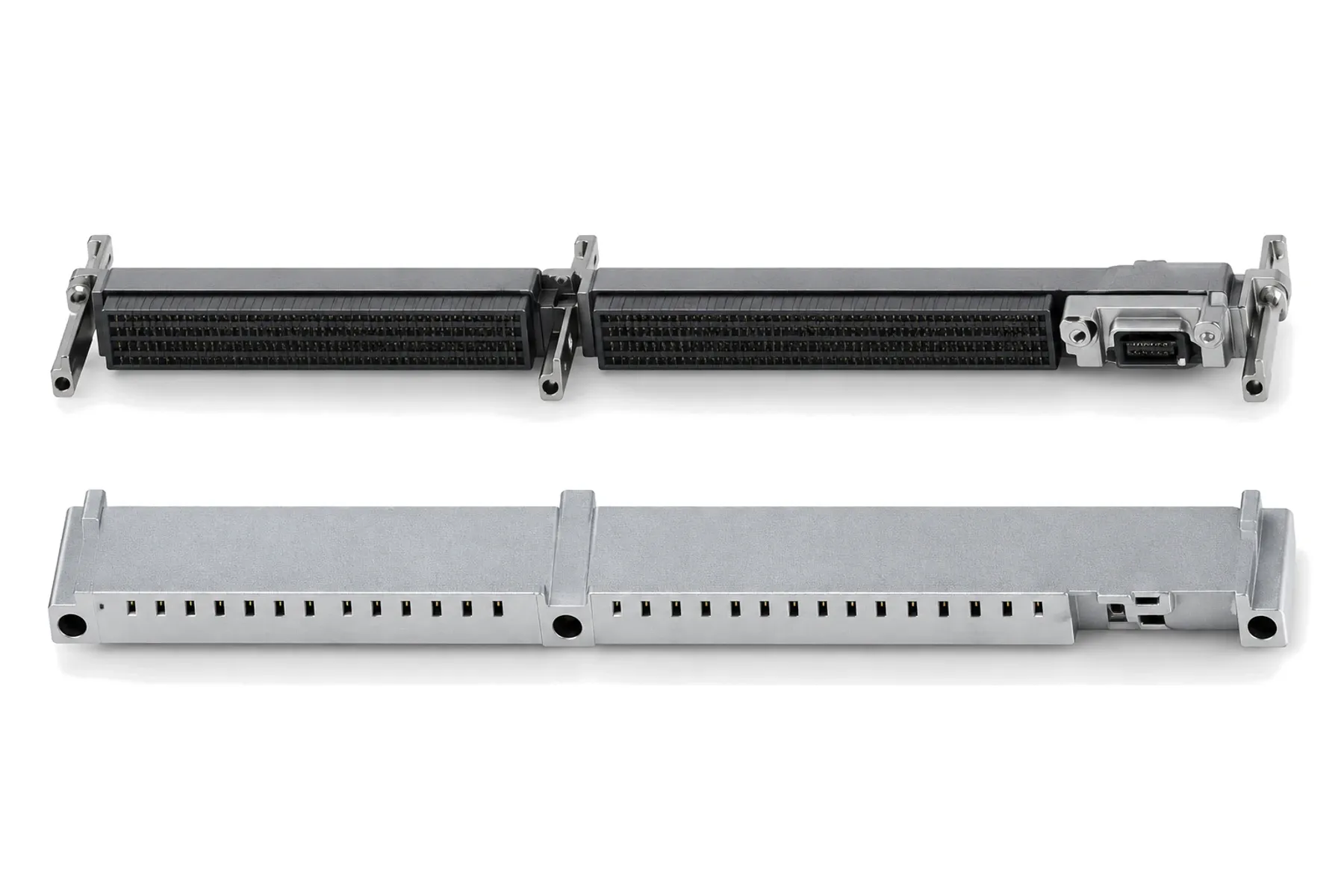
VPX is a family of standards for rugged plug-in computer boards. The connector is the heart of the system: it carries multi-gigabit data, power, RF and optical signals between boards and the backplane.
The standards
| Standard | Covers |
|---|---|
| VITA 46 | Base VPX: board format and high-speed differential backplane connector |
| VITA 66 | Optical (fiber) modules in the VPX connector space |
| VITA 67 | Coaxial RF modules in the VPX connector space |
Module types
A VPX connector is built from modules placed at positions P0 to P6 (6U) or P0 to P2 (3U):
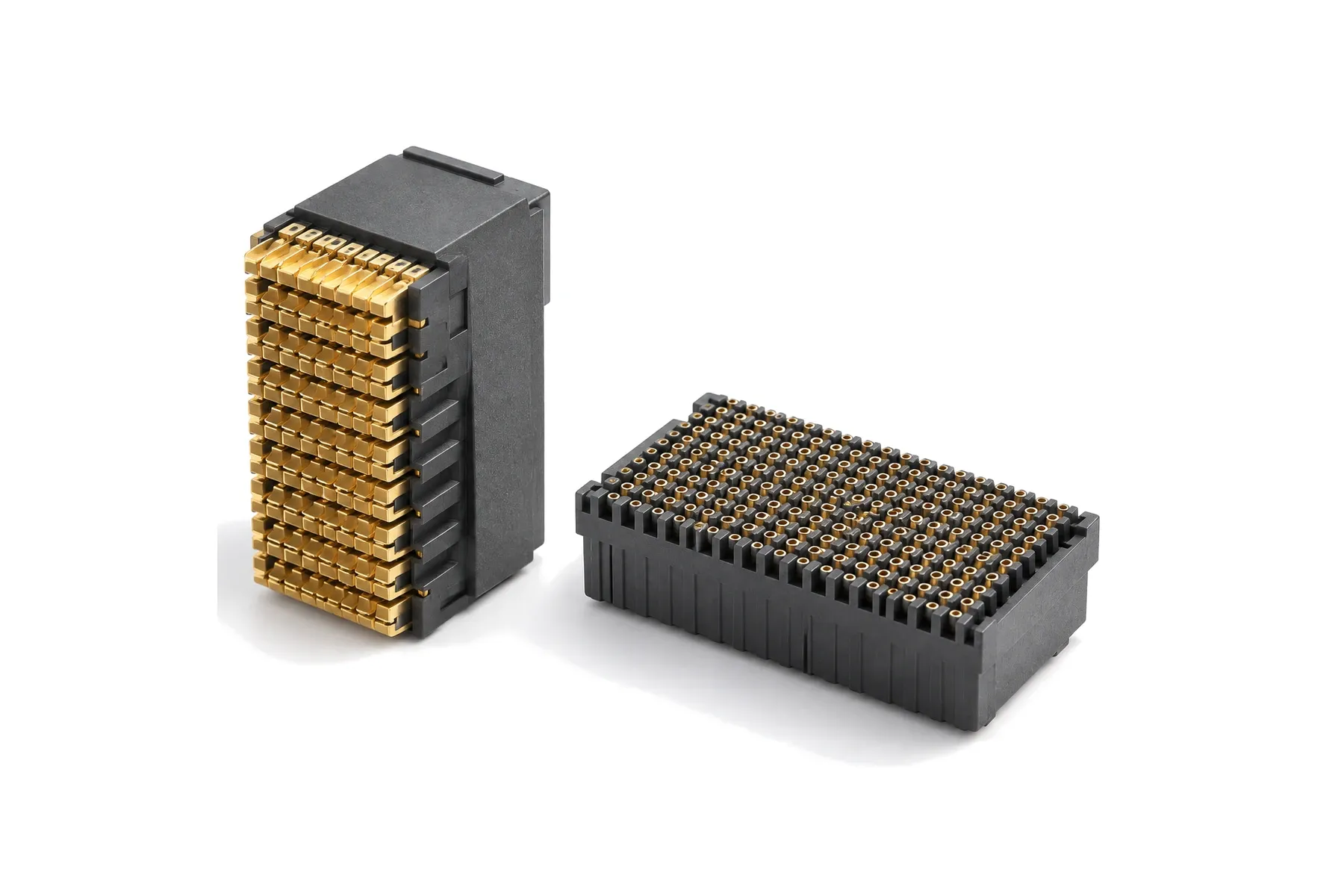
- Differential modules — 100 Ω pairs; our VPX connectors run 6.25 Gbps, and RT2 is designed for 6.25 Gbps with the ability to reach 10 Gbps;
- Single-ended modules — general signals;
- Power modules — our VPX power circuits carry 8 A each at 48 V;
- RF modules (VITA 67) — 50 Ω, DC to 18 or 40 GHz;
- Fiber modules (VITA 66) — MT ferrules with many fibers each, ≤ 1.5 dB insertion loss.
Things to specify
- Board format (3U or 6U) and plug, receptacle or rear-transition connector.
- The module at each position.
- Guide-key positions.
- Temperature range — fiber modules typically narrow the range.
- Vibration and shock levels.
Our VPX part numbers encode the module count, type and the module at each position, so a layout can be ordered exactly. Send us your P0–P6 allocation and we will return a part number and drawing.